


Rising Star
Related Posts
Top 10 books to read about consulting life ?



Hi any reviews on Aptos retail?

Conversation Starter
I have a joke about H1Bs, but it is RFEd
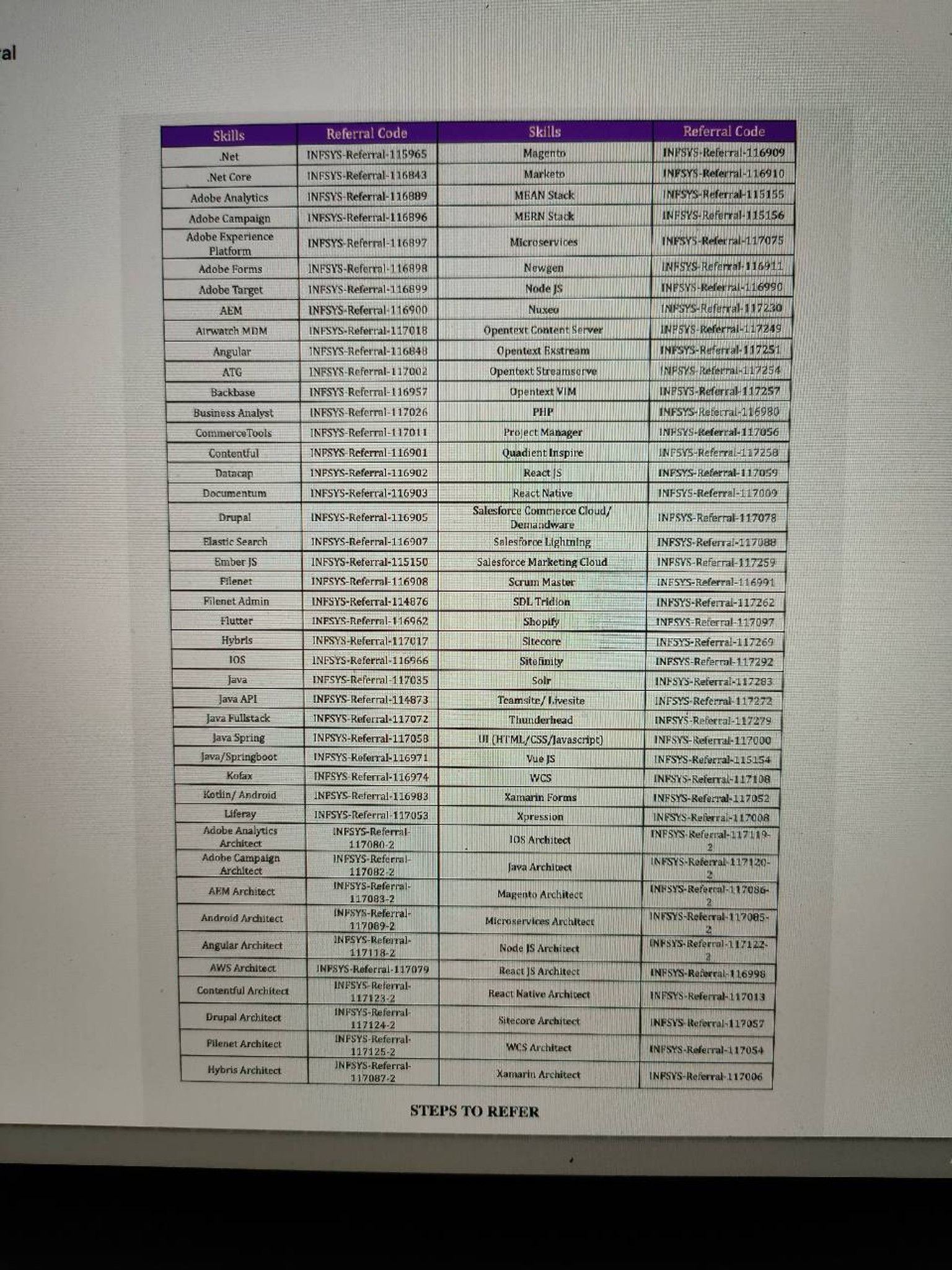
If you are looking for exciting opportunity, Kindly share your resume to patelprachi2128@gmail.com with subject as referral code for which you want to apply.
And update the details below:
First name
Last name
Email id
Mobile number
DOB
Job id
Preferred location
Current/last employer
total exp
Have u applied in last 6 months

Guys Could you please help me with a referral in PwC .. preferred Location Kolkata
YOE 1 YR 10 MONTH
Technology - Sql, FTL, Jira, jenkins, Bitbucket,Agile Methodologies , Htmlcss, bootstrap, angular (beginner level), Core java
*Ready to move to New Technology
currently in notice period 29days left ..if you have anything me , please help 😊

Bowl Leader
7 yoe @ Simeio Solutions in cyber security

New to Fishbowl?
unlock all discussions on Fishbowl.


It depends on what the question is. If you are getting recurring questions about the same thing, it’s possible that one of your policies or procedures has been poorly implemented or managed. It’s also possible that the way you’ve explained the answer makes total sense to you, but their brain works a bit differently and for some reason, it’s not sinking in for them. While it very well could be an issue with them, it’s worth taking a step back and putting yourself in their shoes, or maybe asking another trusted coworker for their inputs. Taking the time for reflection means you could stumble on a solution that will save you a ton of time and energy in the future!
OP, your reply makes no sense to me.
Without knowing what the issues are and what guidance/resource was provided it is difficult to answer. One thing I started doing a few years back is walking them through the issue(s), asking where they think the problem is, dive deeper into that, perhaps they need to step in another persons shoes and look at it from their view point, or pretend to be an outsider who watches what happened between those involved, how did it look/feel as an outsider looking in (that takes a little reminding during the conversation and not everyone can detach to do so.
If the issues are something like harassment, discrimination... that requires different type of action unless you work for one of those places that don't give a crap and your hands are tied, then just tell them that.
Most of the time, employees just want to rant and vent out their frustrations. I suggest turning the question back to them. Like "tell me how I can help you?" or "what course of action do you think you should take? and why?". This causes them to come up with their own solution and validation on how things should be handled. Also, it gives them a chance to take a hard deep look in the mirror. Good luck.
Perhaps I've been lucky, but I can only recall a few instances where people have come back with the same issue. In those cases I just told them that the situation had been resolved and that was the way it would be. Or, it was something that really didn't involve us and we wouldn't be getting involved. Some people have a problem accepting an answer, but when they've been told more than once they tend to understand the situation.
Rising Star
Yeah that’s very true
I'd say after the third time you have to wash your hands of the situation. That could mean escalating, but my guess is most of the time that isn't warranted. You need to have a very honest conversation with the employee where you make it clear there is no further recourse available, or they're going to keep wasting your time and energy with these complaints.
Rising Star
Yeah sometimes you have to be cruel to be kind
I refer them to the resources I already gave them. I try not to escalate those kinds of situations because my manager personally doesn't have time to be dealing with recurring problems. But if I have to, I will.
Rising Star
Yeah that’s a good point
Sounds like it’s time for department management to take ownership of the situation especially if it’s a pattern. Escalate if it continues.
It really depends on the nature of the complaint. When I hear a repeated concern, I usually start by asking the employee what they’re hoping I do with the information. Are they looking for support in resolving it? Do they simply need a safe place to talk? Or do they want formal action taken?
The level of escalation also depends on what the issue is. Harassment, discrimination, retaliation, or anything that may create legal or safety exposure usually requires escalation under policy or law. But when the complaint falls into a gray area like work style conflicts, communication issues, team dynamics, I’ll often consult with leadership (as long as the concern isn’t about them) or loop in legal/labor counsel, whomever is above the involved leadership, if those resources are available.
In short, repeated complaints can signal a pattern, but the response should be guided by the employee’s goal, the risk level, and your organization’s reporting obligations.
Chief
I set one clear follow up point. After that, I escalate early to protect my time.
Nice you can protect your time, what about the people that don't understand and have to use more of their time to go to the source to get more clarity. I have had to meet with people 3 to 4 times to get them through some simple processes because of technology difficulties, hardship in understanding, etc. My time is to support the employees, we are after all HUMAN RESOURCES, meaning we are to be a resource for employees and not brush them away.
Why are you escalating and have you thought you’re not very good at explaining?
To the Author of this post, you seem to like the responses that are easy and cause you very little work rather than dealing with the issue and looking at it from a different standpoint and questioning yourself. Maybe you are not explaining everything the way someone understands. And you have to explain things in different ways. Everyone comprehends at different levels, get at their level. And no, you do not need to be cruel to be kind, that is a cop out. Have some empathy and understand where people are coming from.
Pro
When it’s the same issue from the same person, I move from “here’s what you can try” to “let’s talk about what’s getting in the way of you taking the next step.” Sometimes the barrier is clarity, sometimes confidence, sometimes avoidance.
If you’ve provided resources and guidance multiple times, escalation can simply mean looping in their manager to create shared accountability.
Pro
I like them phrases, I’ll make a note of them, thank you!
Chief
When people return with the same issue, document, redirect, then escalate after a clear pattern appears.
Pro
I agree