



Related Posts
Who’s negotiated severance? Any tips?

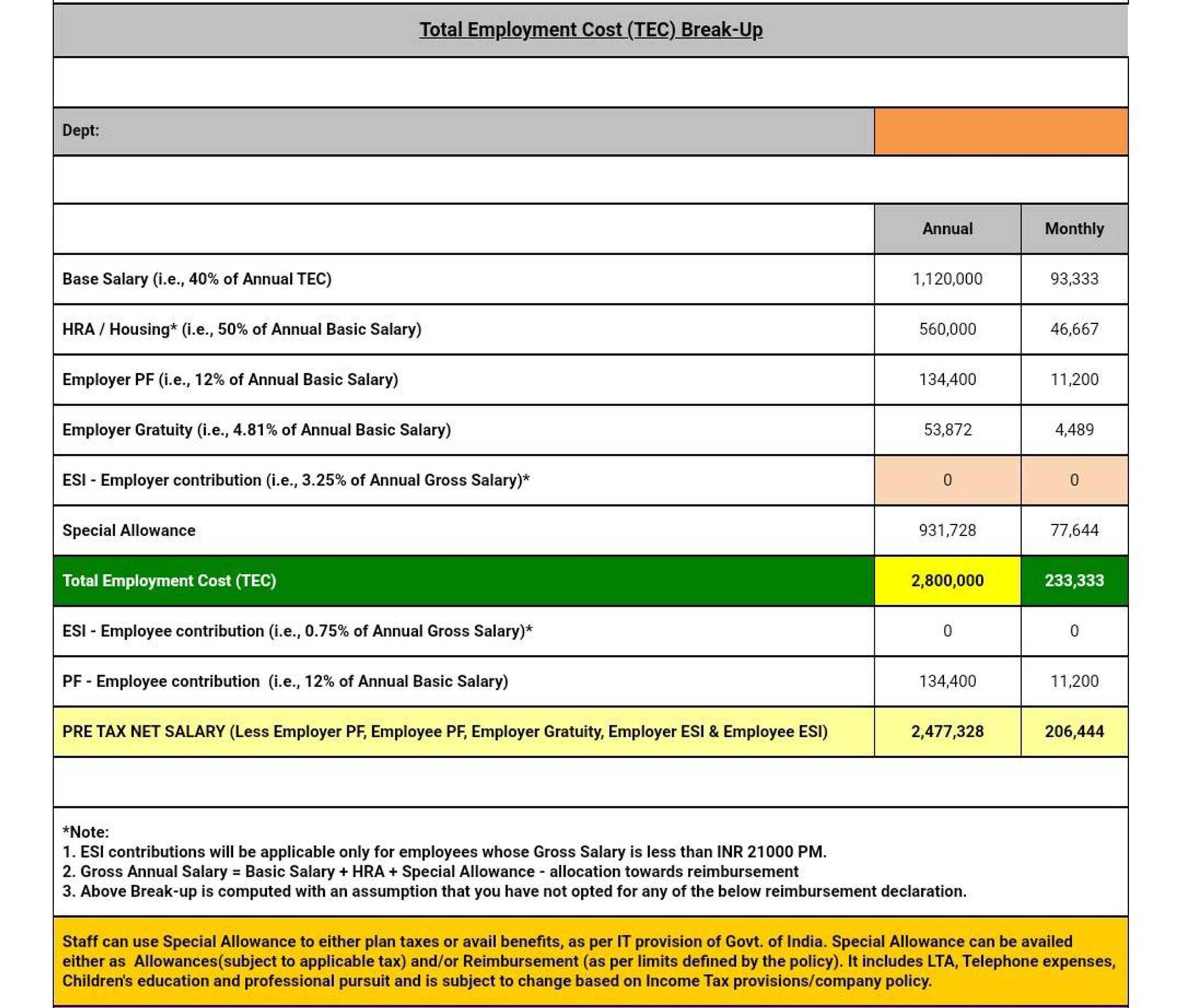
I have received offer from Shell and SAP labs is in final stage salary discussion. Shell is offering 6 lacs more than @SAP labs. I have tried to negotiate a lot from SAP but they are not ready. They are putting conditions like give your full commitment to join then only we'll release offer letter. I am currently looking for work life balance with growth. Should I join @SAP considering its a Product based and good WLB and learning? Teck Stack - Java/Micro-services/cloud YOE - 11yrs

More Posts

what are your average weekly hours?
walk the walls
Anyone from Leidos? Anyone? ...... *crickets*

Subject Expert
New to Fishbowl?
Download the Fishbowl app to
unlock all discussions on Fishbowl.
unlock all discussions on Fishbowl.


Coach
Startups are hard.
There is a phrase to use - I would like to learn more about the position and if possible the company’s range for the position before I give an expectation.
And after you learn more about it, you can always use the “ based on what I have heard and my research, I am looking for X”.
Depending on what you think that start up would be - I would take a salary. Let’s say $60,000 divide it by 2080 = the hourly rate. (Almost $29/ hour)
Most startups are not working 40 hours. So, if you think it is going to be 60 hours a week, do 60hrs x 52 weeks x $29/hourly rate. That is what you should target. (90k)
Ok maybe that is too high. But you get my point.
EXCELLENT insight. Totally agree.
Typically you want them to give the first number. If they don’t volunteer the range and ask you for a number, try something like “While salary is important, I’m evaluating my options holistically and considering the entire comp package including benefits, equity, and perks for each position. Could you share the way comp is structured for this role?”. Get as much info as you can before giving a range.
Don’t tie yourself to a specific number until you’re at offer stage. You’ll have much more leverage if you wait until they’ve decided they want you.
If you have to give a range without knowing their budget, weigh your market value against how much you want this specific job. Market value is tough to determine and can vary based on how many qualified applicants an employer is getting at the time. Try averaging the salary ranges from the last three related positions you interviewed for. If you haven’t interviewed for three similar-ish positions that provided salary info in the past year, average your current or most recent salary, the best paying related job you’ve ever interviewed for (exclude recruiter screens), and your best guess at a number you would expect a hypothetical employee with your skills to make at this company.
The company’s industry, stage, customers, and funding will all factor into how much they pay. Try not to focus too much on what you think they can afford though. If they’re below your range, this isn’t the job for you.
Remember that you have options. Imply that you have options when discussing comp. Even if you’re currently unemployed, internalize that you will have other offers.
When I negotiated my current role in February I was technically unemployed. I left my previous company in January once I deduced that their impending layoff would leave me covering multiple roles indefinitely. While I hated my last job, the ~231k comp package (162k base, 41k bonus, and ~29k in RSUs) was the most I’d ever made, and the tech market had tanked.
Rather than settling for whatever offer I could get, I discussed comp as a competitive candidate with options. I avoided giving any number as long as possible and gathered info about the comp structure, benefits, and potential range. Meanwhile, I timed another interview process so that I had a backup offer that came in the same week. I knew that the other offer wasn’t going to be competitive, but they didn’t and I leveraged it to my advantage.
Their initial offer was 195k base and 59k bonus with 3 weeks of PTO. While this role was my first choice and I knew the other offer wouldn’t even be close, I also understood that having another offer gave me leverage and I had nothing to lose by asking for more. (The other company’s offer maxed out at 180k plus pre-IPO options aka magic beans.) I ultimately negotiated 205k base, 62k bonus, a 20k sign-on, and an extra week of PTO for a total of 38k in added value.
Negotiating was as simple as having leverage and politely asking for reasonable increases. Always attempt to negotiate. I’ve gotten 3-16% increases on offers just by asking.
Wow. I am learning so much! This is amazing thank you. I literally copied your statement word for word. I can see why you have been able to negotiate so well! This is great advice, I definitely have a much more clear direction. I have never not gave a specific range when asked…curious to see how that will play out. I’m assuming it’s rare to hear