


Rising Star


Related Posts

Can someone refer me to CITI ?


Need a job in Kangra district Himachal Pradesh

Chief


Conversation Starter
What’s the EB1A wait time for GC?
Additional Posts in Politics


Enthusiast
Conversation Starter

Visual Storyteller
Chief
Enthusiast
Conversation Starter
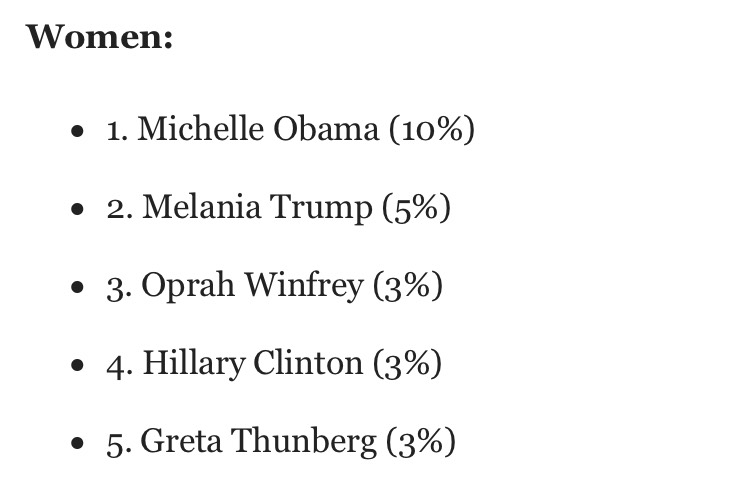
Rising Star
Visual Storyteller

Pro
Conversation Starter
Let’s hear it. Why is this a bad solution?
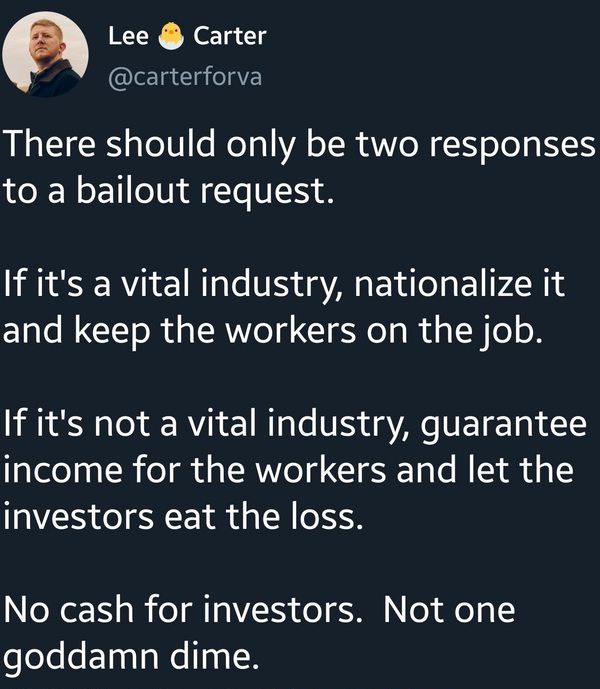
Pro
New to Fishbowl?
Download the Fishbowl app to
unlock all discussions on Fishbowl.
unlock all discussions on Fishbowl.


Enthusiast
This family makes Hunter Biden look like a candy bar thief at a bodega.
The level and pervasiveness of self-dealing and corruption is absurd.
Conversation Starter
Yes. What Hunter was doing was horrible.
Enthusiast
Libs are coping hard
Whether because you’re a bot or actual MAGA, your lack of humanity is the same, A1.
Enthusiast
M2 - Your thoughtful writing on this topic is, “ Yes. What Hunter was doing was horrible.” Then a couple of objections to using AI. I prefer some deeper insight as provided by inquiry of AI, proofed, and used to further a nuanced discussion. I am sure nobody here knows everything about the law, the ethics, and the facts on the ground. Researched responses are superior to emotional, tribal, gut feel, or ignorant responses. Human prompt and review disqualifies the post as AI slop. Worst case it becomes an erroneous post by the human.
Pro
AI can be useful for research, but it does not automatically create “deeper insight.” It can just as easily create confident, polished errors, especially on legal or ethical questions where the facts matter. Human prompting and review help, but they do not magically remove the problem. If the human does not already understand the issue well enough to verify the answer, the AI can simply make weak reasoning sound sophisticated.
Calling non-AI responses “emotional, tribal, gut feel, or ignorant” also creates a false choice. The real comparison is not AI versus ignorance. It is careful human reasoning versus outsourced, machine-generated persuasion. A thoughtful human can research, cite sources, weigh uncertainty, and revise without laundering their argument through AI.
The issue with “AI slop” is not merely that AI was involved. It is that the writing often becomes generic, overconfident, morally flattened, and detached from actual accountability. On serious topics, especially involving law, ethics, and harm, people should own their reasoning. AI can assist, but it should not be treated as a substitute for judgment, moral clarity, or firsthand understanding.
Capitalists are gonna do this no matter the party, its in their interest. They do not really give a fuck if you're upset about it or that it's corrupt.
Enthusiast
Yes corruption happens; what we’re highlighting is the brazenness and volume.
I give Trump props for following through on his promises of transparency and being the biggest / best.
Enthusiast
This certainly raises some questions. Is it politics as usual or is it illegal? Perplexity says, “No, it is not illegal for Eric Trump—a private citizen with no formal role in the administration—to own shares in Foundation Future Industries or for the company to receive a Pentagon contract through standard SBIR processes.
Legal Context
Federal conflict-of-interest laws like 18 U.S.C. § 208 apply to government employees, not family members outside official positions; Eric Trump’s advisory role at FFI and Trump Organization falls outside these restrictions.
Emoluments clauses target the president directly receiving foreign/domestic benefits without congressional consent, but do not extend to adult children’s private investments.
Criticisms vs. Legality
While Democrats and watchdogs call it unethical nepotism or “pay-to-play,” no laws were broken based on available reporting; similar deals involving Trump Jr. with drone firms faced the same distinction.
Pro
It is worth pausing on the premise embedded in that response, because it quietly substitutes assertion for argument. The claim that “it looks like AI changed your mind” is presented as though it were self-evident, but it is, in fact, an inference built on no visible evidence. A change in position—or even a refinement of tone—does not uniquely indicate the involvement of AI. It can just as easily reflect what ordinarily happens in any serious discussion: a person considers counterpoints, revisits their assumptions, and responds with greater precision.
Framing that process as “AI changed your mind” does two things that are not especially defensible. First, it attributes agency to a tool without demonstrating its use. Second, it implicitly discounts the possibility that a person is capable of independent reconsideration. That is a strange standard to apply in a conversation that is ostensibly about reasoning, legality, and ethics, all of which depend on the ability to update one’s views in light of better arguments.
To be direct: there is no basis here to conclude that AI was used at all. The structure, content, and progression of the argument are entirely consistent with ordinary human writing—particularly the kind that emerges when someone is engaging more deliberately with the topic. If anything, the insistence on attributing it to AI risks becoming a way of sidestepping the substance of what was said. It is easier to question the origin of an argument than to engage with its content.
There is also a subtle inconsistency in pivoting back to “the legality and ethics of the business dealings” while simultaneously undermining the legitimacy of the prior response. If the goal is to have a serious discussion about law and ethics, then the relevant move is to address the claims being made—what standards apply, what facts are known, what uncertainties remain—not to speculate about authorship. The latter contributes nothing to resolving the former.
More broadly, the suggestion that a more measured or structured response must be AI-generated reveals a somewhat narrow view of how people write when they are being careful. Deliberate, layered reasoning is not the exclusive domain of machines; it is, ideally, the baseline for human discourse on complex issues. Dismissing it as artificial does not strengthen the critique—it weakens it by avoiding engagement with the argument itself.
So before moving “back to the legality and ethics,” it would be more productive to acknowledge that no evidence has been provided for the AI claim, and that the discussion is better served by focusing on the merits of the reasoning rather than its presumed origin.