
Related Posts


Community Builder
When is it best to leave consulting? Here's how I think about it.
First, are you enjoying it? If so, why leave (it can be a great life long career)?
Second, are you still learning fast? If not, you're missing out.
Last, what skills do most employers value? In my experience, this dictates 2 optimal jumping off points:
(a) 2-3 years in. Consulting "tool kit" is solid
(b) ~1-2 year into Manager. Employers value experience managing people.
See: www.linkedin.com/in/richrosser/



Coach


Conversation Starter

Visual Storyteller


New to Fishbowl?
Download the Fishbowl app to
unlock all discussions on Fishbowl.
unlock all discussions on Fishbowl.


Review Overview
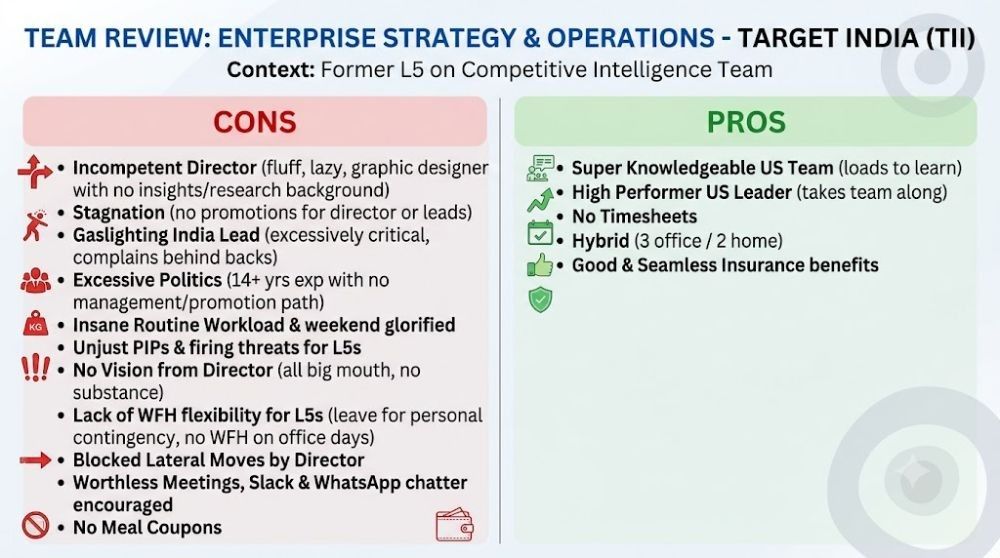
Team: Competitive Intelligence, Strategic Insights and Intelligence / Strategy, Planning, Intelligence and Implementation (SPII)
Department: Enterprise Strategy and Operations at Target in India (TII)
Context: Former L5 Senior Manager / Individual Contributor on the Competitive Intelligence team
Pros
Global Collaboration & Leadership
Excellent US Counterparts: The US-based team is highly knowledgeable, efficient, and offers massive learning opportunities.
Strong Global Leadership: The US leader is a high performer who is deeply invested in bringing the entire team along on the journey.
Autonomy & Perks
Operational Autonomy: No timesheet logging is required.
Standard Benefits: The standard 3-2 hybrid model is beneficial (when honored), and the company health insurance benefits are seamless and comprehensive.
Cons
Leadership & Vision
Incompetent Director: Led by a Director with over 25 years of experience (primarily in graphic design) but no background in research or insights. Leadership relies heavily on fluff, possesses no substance, lacks vision, and causes team-wide stagnation.
Toxic Lead Presence: The India lead for the Competitive Intelligence team is overly self-critical, engages in gaslighting under the guise of feedback, and actively complains about team members to the Director.
Lack of Career Growth: Because the Director is at a career standstill, promotion pathways are completely blocked. L5 employees face intense office politics, zero people-management opportunities, and restricted growth.
Workload & Culture
Inefficient Workload: Employees face a grueling routine workload with poorly communicated expectations on how to advance. Weekend work is actively glorified.
Forced Engagement: The team culture feels like forced "MBA class-participation," cluttering schedules with worthless meetings and non-stop, unnecessary Slack or WhatsApp messages.
Exploitative Performance Practices: There is a history of L5 employees being unjustly placed on Performance Improvement Programs (PIPs) alongside constant, unnecessary threats of termination.
Flexibility & Benefits
Rigid Hybrid Hypocrisy: While the official policy is hybrid, strict double standards apply. New joiners and L5s face rigid restrictions for family or personal emergencies; working from home on an official office day forces you to use a personal leave day.
Blocked Lateral Movements: The Director actively restricts L5 employees from pursuing internal job postings to move to other teams.
Missing Perks: No meal coupons are provided.