

Related Posts

Does HCL run BGV on UAN?

Additional Posts in Advertising
Which agencies are going through layoffs
Going in house is the move, right?

Besides salary, how to pick between job offers?


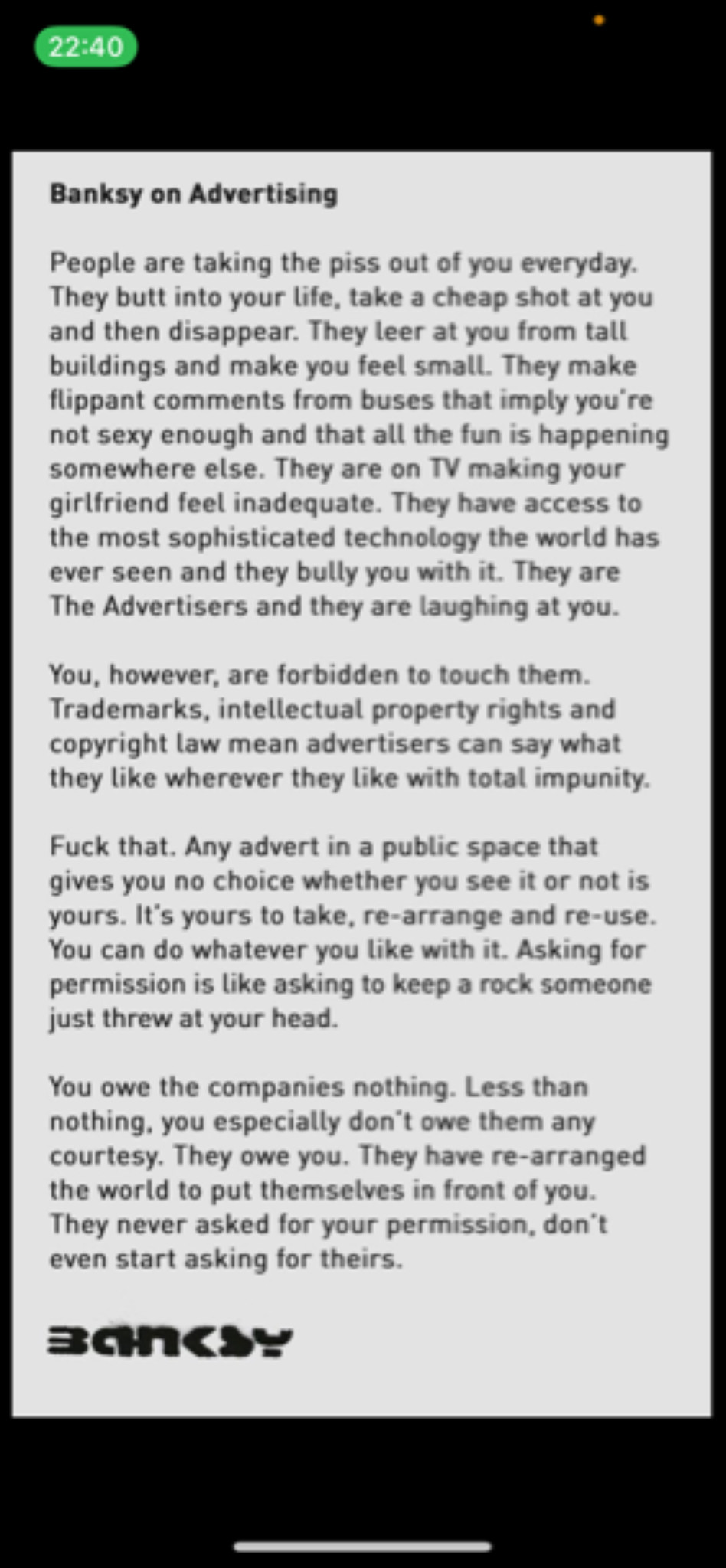
Banksy on Advertising: Thoughts?

Rising Star
What’s the WLB at Droga like?

New to Fishbowl?
Download the Fishbowl app to
unlock all discussions on Fishbowl.
unlock all discussions on Fishbowl.


This question gets asked here at least once a week. Only consistent thing I’ve seen in replies is relationships. You need somebody to vouch for you.
Pro
I’m one of the lucky ones who just applied via LinkedIn. I didn’t know anyone. I beefed up my resume to cater more to marketing and included a bomb cover letter about why I was actually interested the position after being agency side for so long.
Make yourself indispensable to the brand you are working with and build trusted relationships within that company. Then…don’t be afraid to talk about your wish to be working directly for the brand. There are risks so you have to trust the clients on a personal level. Keep it confidential until there’s an actual offer in hand and you will accept it. The tricky part is the agency being okay with a valuable person swapping sides. Make it a win/win for both sides and you.
I said it on another place too but ddb1 said it. Networking/relationships
I got in cuz someone vouched and wanted me on the team. There’s many many many applications and very few spots
I moved from strategy on the agency’s side to client strategy. Was hired by a guy I had worked with at an agency who had made the same move years ago. Without that connection I don’t think I could have gotten even an interview.
I think it really depends on the level of brands you are working for. I’ve always worked in small-medium sized agency and I’ve seen it happen a lot but I think with bigger brands it might be more challenging
You're interviewing with a hundred other people that have the same # of years experience as you. Talk about the things that make you stand out from them.
Indeed, this gets asked a lot. I've done both sides. You did not say what your discipline is, so this will be general:
Understand that in the final analysis, agencies generally live in a world of "ideas" and clients
generally live in a world of "operations". This reality sets up the difference in the work experience.
On the agency a person will learn more & faster early on. You also learn across so many categories, and usually move up faster in your early years. On the client side, marketing communications is not the center of gravity.
Usually the business units are product/ operations/finance led, so your longer term promotions will be capped.
Net - on the agency side you are at the center of what they do. On the client side, you are working in support of what they do.
On the client side you usually won't have fight to get "in the loop" on briefs & getting to the decision maker. WLB is generally better on the client side, and you may make more $$ on the client side, unless you get to the top of an agency.
The client side is not as "fun", because they live in more of a "what did we get sold/produced/ shipped today" mentality, and planning for how all this is going to happen over the next 3-6 months. Being into culture & trends is usually not their focus. At an in-house agency, it is, but it's different than an outside agency.
Of course, all of the above can vary by client and individual.
Either side has advantages & disadvantages, based on how an individual is wired.
OK - making the move:
To be perfectly candid, one of the best ways is to move to a client that you are working on while on the agency side. The reason is because that client knows you in a way that is beyond your resume/book/website, etc.
A couple of other approaches are to:
1. Focus on client side categories that you have worked on (once again you are able to credibly discuss the business dynamics of the category & the competitors).
2. Look for clients that are known for prioritizing your professional area. That way, your value becomes more clearly evident.
3. Look at emerging in-house operations at clients. There are lots of these out there.
4. Be aware that clients can change their mind.
While in-house creative operations are generally continuing to grow, Keurig Dr. Pepper just announced the closure of their entire unit - and it was highly regarded
Hope this is helpful.