

Related Posts




Conversation Starter
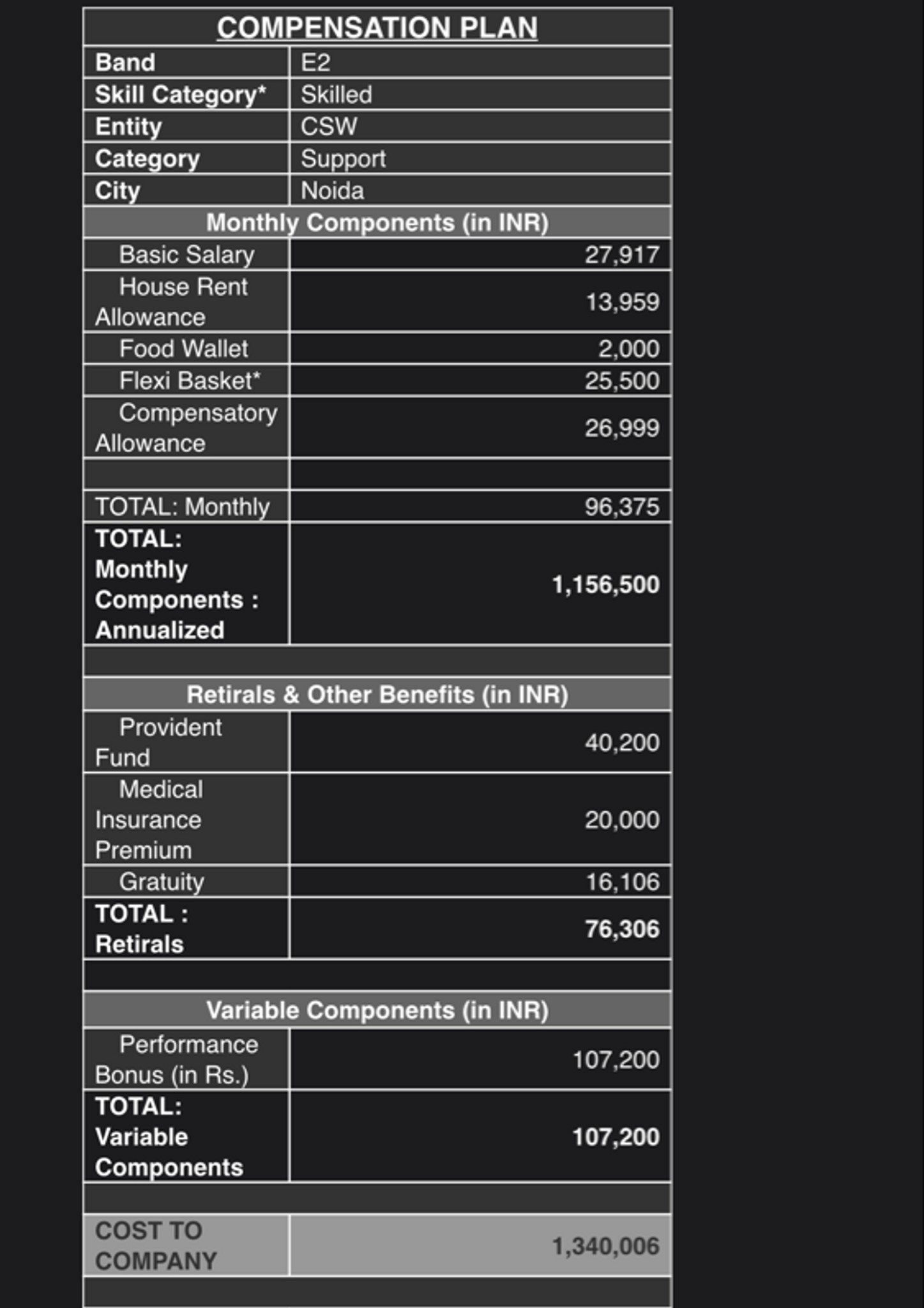
Wht would be the In-hand salary out of this

Hey what's ur number
Hi fishies! Are there any recruiters from Facebook (Meta) who would be kind enough to review my resume and give me some feedback? From my perspective I’m a candidate for some of the roles I’ve recently applied for and also have experience as a contingent worker there and would like some honest feedback so I can reassess and reapply. Thanks so much in advance!
How is ua brands company?
Additional Posts in Excel Genius

Visual Storyteller



New to Fishbowl?
Download the Fishbowl app to
unlock all discussions on Fishbowl.
unlock all discussions on Fishbowl.


Mentor
Either your transactions:
(i) are all 0.00, so that it sums 0.00
OR
(ii) are composed of negative and positive numbers, such that it sums 0.00
Excel can highlight/extract both cases, but the way to do it depends on which one is your specific case
Mentor
I see. Well, there are again two possibilities:
(i) you have multiple groups and/or subgroups (e.g., rows classified as "travel expenses") and that specific group (or multiple groups) can sum 0. That should be easy - you can use =UNIQUE() and =SUMIFS()/=SUM(FILTER()) to extract these values and check if they are indeed 0
OR
(ii) the list of rows/cells that sum 0.00 is completely random, and you'd need to test all possible combinations - in this case, you can use the excel solver to do it, albeit if you have a HUGE (e.g., 10k rows) number of cells, it can take a while. If this is your case, you can try the link below, but the idea is simple: you can simply ask excel to sum all possible combinations and check the ones that match 0 (and ofc check if that's just random/luck, or if it's what you are actually looking for).
Link:https://www.ablebits.com/office-addins-blog/find-combinations-that-equal-given-sum-excel/
Coach
Can you not just use a filter and or a helper column?
You might simply be able to do a sumifs as well, depending on the data.
Or maybe you need to utilize conditional formatting?
This is tough to visualize how to do what you want to do exactly without looking at the data.
Solver function works for these type of things
Okay, so it depends on which account you are looking at. For example, if you are looking at an expense account, and you see there are too many account transactions that some up to zero, that is have a debit and a credit entry, you need to figure out what kind of adjustments these are. Sometimes in the GL description it would say “adjustments” and I would filter that out and see if they all sum up to zero and if they do, you have the right nature of transactions with minimal fluke summing up to zero.
Try a pivot table and group by the category, summing thr values