


Related Posts


How much do anchors in news channels earn ??

More Posts


Visual Storyteller
I feel personally and professionally attacked


SUGGESTION NEEDED URGENTLY
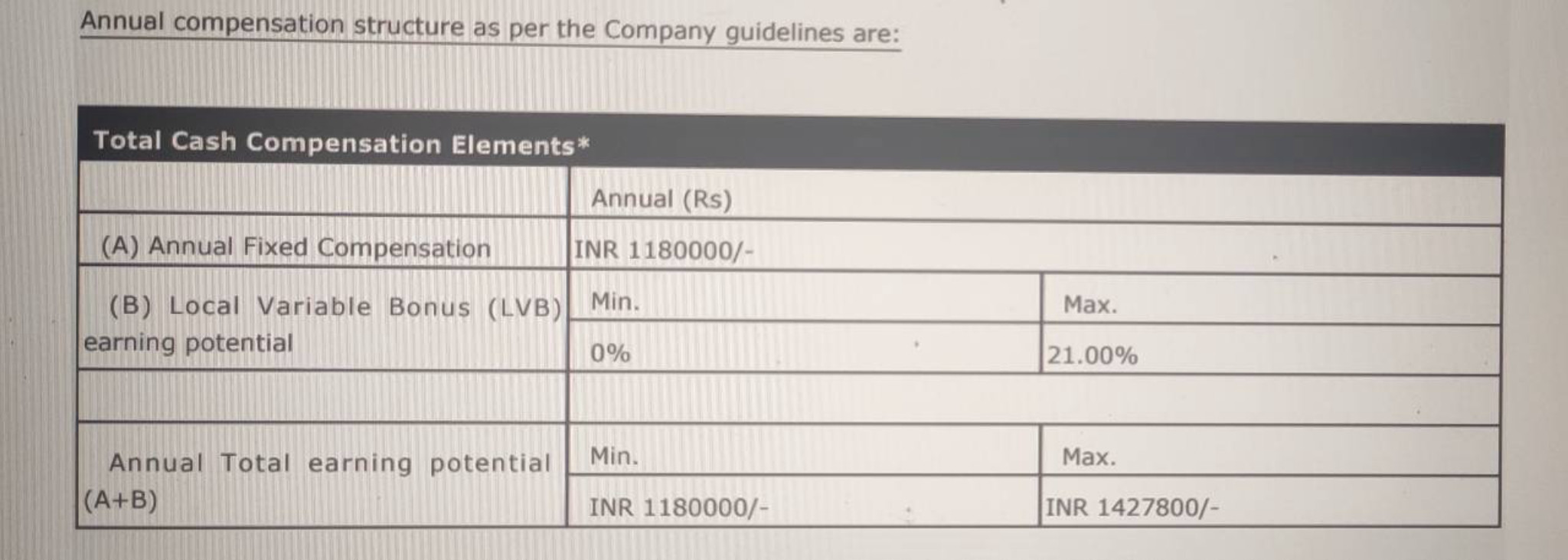
Hi Fishes, I had an offer from TCS 10 lpa for the role of Test Automation Engineer and I have asked for 15 lpa fixed from amdocs . However they have a proposed fixed CTC of 12.5 lpa .How do i negotiate it.Can I ask for 13.5 lpa?Amdocs Ps-I have an experience of 3.8 years
Additional Posts in Salary Negotiations
Any fellow overnight security guards in here
What is a good salary for a director in NY?

New to Fishbowl?
Download the Fishbowl app to
unlock all discussions on Fishbowl.
unlock all discussions on Fishbowl.


First, I would say everyone who stay at a company for a long time (like me) is underpaid. Therefore, you can assume newer hires are getting close to and in some cases higher salaries. My suggestion would be to look at internal transfers as a way to ‘more easily’ open up your compensation for a fair discussion. Having the ‘I am underpaid’ discussion is rarely fully successful. Maybe you get something but I doubt you’ll close the gap.
Mentor
1. This has nothing to do with age. Would it be OK if they're 40 yo and making more while in the same role?
2. There's usually a range and I've seen it vary by more than 60k. So if you fall anywhere within this range, the company might be comfortable still paying you the same. New person was able to negotiate because they're coming in new.
3. As other have said, a salary increase is less likely to bring you up to market rate. So you have to do something more drastic. While I understand that you love your role and the flexibility, etc., You need to invest in yourself to show you're worth much more and this is what you do by switching roles within the company if you want to stay or leaving the company for a much higher pay.
4. Companies do not reward loyalty which is counterintuitive but that's how they operate.
Wait OP. Are you mad about me? Same company.. Chicago area? Lol
Also, there are two sides to this coin. You’re underpaid in the sense that you’ve been at the same company for 8 years.
On the other side, IF you two are in the same role, then it sounds like you’re being paid market value for that position. If you want to increase your market value, you need to change your role.
Mentor
This happens a lot. As time goes on the pay range may be adjusted up so anyone new could be paid the same or a bit higher. The pay range is the value of the work to the company. If you are both being paid within the pay range, the company may see no issue. I feel it is best to address this at your annual performance review. Stay away from any conversation regarding years of service. Come prepared with a list of your accomplishments and the positive contribution to the company. Technically, you should be contributing more than a newbie with less experience so would get a higher performance increase.
For years I'd get merit and then find out there was a col adjustment that moved the minimum and get bumped right back to the minimum. My company finally changed that policy and applied merit after minimum but that didn't change the years of lost wages I was out because of it. It's time to make a move in your company (or out) but you have to be willing to get out of your current pay scale and jump into another to be treated like the experienced employee you are. Because fact is you're not alone. It's happening to everyone with tenure and they won't do anything about it but say your salary was administered fairly within the terms of their pay policies.
Subject Expert
Your market rate is 8 years old while the other person’s market rate is 2022. Age has nothing to do with it. Additionally, new hire budgets are always bigger than merit increases. You can ask HR for a salary review to get you current.
Talk to your boss. As other mentioned this happens a lot. Tell them you did a research and you need xxx amount, otherwise you’re forced to look elsewhere
How did you find out?
I asked a new hire how much he was making.
If you are interested in staying and improving your workplace, you should look into unionizing. Union contracts make pay transparent and equitable, as well as providing for annual wage increases.