

Related Posts


When does EY announce promotions/raises?

Hi Fishes,
Please help me with In hand salary
TIA


Bowl Leader
More Posts
IT audit exit opportunities? Where do I begin?


Mentor

Conversation Starter

Pro

Additional Posts in Compensation in Consulting


Community Builder
New to Fishbowl?
Download the Fishbowl app to
unlock all discussions on Fishbowl.
unlock all discussions on Fishbowl.


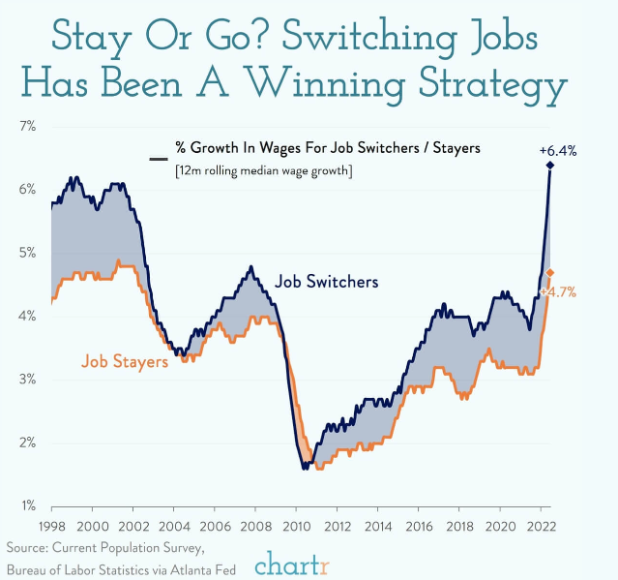
In the short term of course you make more by switching (which is what this is showing ).The longer term is a little trickier, however
I’ll make a case for it in consulting. I’ve stayed at same firm for 14+ years and have been promoted every 2-4 years. My salary has more than quadrupled during that span because promotions come with big raises and my annualized increase is 10% or so. My bonuses as a SM have been great too.
Because I’ve been here so long, I have very good relationships with leaders at the firm and nowadays am able to cherry pick whatever projects I want and have a generally flexible work schedule as people trust me to get work done.
If I had left for a short term raise, I would have delayed my promotion (no matter what competing HR says, everyone I know who leaves has told me their promotion clock resets at a new firm) and had to build up my network entirely anew. Maybe I’d be making a bit more still but I’m pretty happy with what I’ve gotten.
The higher you go in Consulting, it’s tougher to jump for all the issues SM1 mentioned. The level just below MD/partner is the hardest one, so jumping at that level better come with a HUGE raise because it could be a short trip.
Probably less true in consulting where pay levels tend to be standardized and you get promoted every few years with a big pay bump
It depends.
Looks like one benefit is having a job during recessions. The graph doesn’t account for those who have been laid off – just averages data for labor market participants.
Previously, if you worked for an employer for 30 years, you were provided a pension - effectively rewarding loyalty. With the transition from Pensions (defined benefit) to 401k (defined contribution with vesting), there is little to no benefit to staying beyond the 401k match vesting period.
Yes, if you work for a company that is privately owned and that truly values their employees, they will ensure your comp stays within market rate and the bumps are 8-15% a year. You also earn highly valuable equity for when that company sells
Yes we are
Chart is a bit deceiving IMO. Obviously there will be wage growth in the 12 months from changing a job, most people wouldn’t for not change in salary. So inherently there will be a change, but look at 36 month or longer and I’m sure they return to the mean.
Use data
please fix
Thanks
Switching or staying has is pros and cons.
Yes your salary grows faster when switching jobs, and to a certain level you get regularly a promotion/nicer title. But this has a limitation.
And on the other hand: often the really important jobs are given to ppl who are with the company for longer (min 5years or more) or who do not seem to be a job hopper. And I mean not the team lead xyz, or even director or entry partner positions. Meaning the one where you manage some dozens of ppl or represent a full industry or are in the higher management.
It makes sense if you are principally focused on compensation growth. However, your internal networks and understanding of how the new company operates are shot.
Generally speaking, It's harder to make an impact when you start over. Sure you got more money, but your management will be asking why did we pay this fool all this money....until you make an impact.
Switch jobs and you’ll get the pay bumps but you’ll be delaying your route to partner. Switching a few times can slow down trajectory on that front. Depends on your capability. If you’ve got potential to go the whole way and like your firm - I’d recommend staying. Your overall career earnings will benefit from the decision.
Yes it is.