


Rising Star
Related Posts


Pro


Rising Star
Additional Posts in The Worklife Bowl

Chief

Visual Storyteller

Conversation Starter
Conversation Starter

Chief
Visual Storyteller
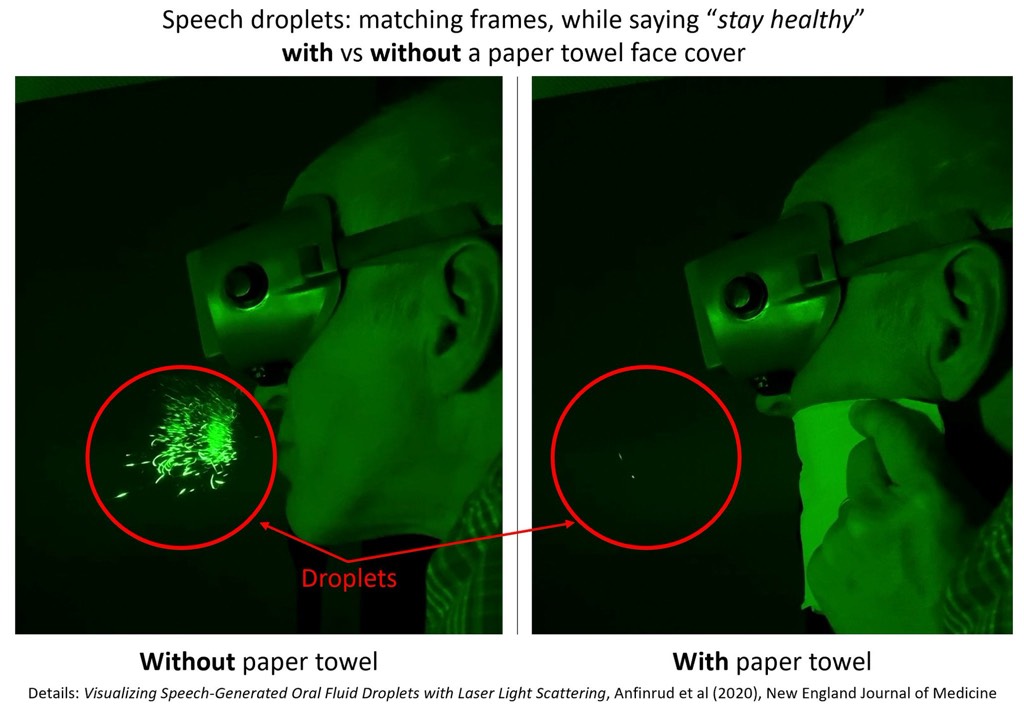
WEAR A MASK!!!!!!


Pro

Enthusiast
New to Fishbowl?
Download the Fishbowl app to
unlock all discussions on Fishbowl.
unlock all discussions on Fishbowl.


Tax incentives seem to be the biggest reason, though not the only one. Companies get tax breaks for bringing employees into the cities where they have offices b/c the employees then pay tax out of their paycheck to those cities.
Large corporations shifting tax burden away from themselves and onto workers is peak capitalism.
Rising Star
The energy and creativity in *some* office environments is lost if people work from home. If you just do drudgery then wfh is fine but being able to spend time alongside your colleagues can be very important
Rising Star
My best creative work is done outside of the office, but also with my colleagues, so this makes sense from that angle.
Many companies receive tax incentives for having people in a centralized building. Some people and teams work better when they are together in one place.
And some management has trust issues with those they manage. And don't know how to manage in a remote setting. And many of the older management types probably still have that old school mindset of office work needs to be done in the office. And micromanagers lose their control if people are working remote.
Rising Star
The micromanaging makes me crazy, but I feel like the others are a solid point.
Pro
The 9-5 workweek is a product of the pre-computer era. It’s harder to make sure everyone is working the full time.
Pro
Yup. It was a big thing. Dumdum’s bragging ruined it for everyone
They have office leases that they need to justify to Boards and Management.. especially those companies who’ve let the accountants run riot, and started measuring office utilization rates as KPI for lease renewals..
Trust
No, but businesses like to pretend that's the case.
Imagine a world where a significant portion of the workforce WFH. How many people will lose jobs? And the impact of that. A lot of people are employed as a result of people come in to the offices.
If that’s how you think then your WFH problem is solved — just quit and stay home, since your job will be lost anyway right?
Aside from what others have stated, it also makes it more difficult for employees to bounce if they’re full-time in the office. How will you do a job interview if you’re in a cubicle 9-5? RTO is another way of controlling the workforce, and it helps to push out those companies can’t control without paying a severance, while bringing in folks they can control.
It’s hard to generalize as its company, industry, and role dependent, but it seems like in many cases people could and should easily work from home with some regularity. While some want employees back to micromanage, many seem to be after building the “culture” which can be much harder to do when remote, especially for more junior employees.
Sadly, many people don’t have the discipline to work from home. And they ruined it for the rest of us. There are times in person meetings/brainstorming are just better. But for most work, if you have a dedicated quiet work space at home that can be more efficient. But some people are like cats getting distracted by that laser toy and they get nothing done if they WFH.