

Related Posts


Bowl Leader
Bowl Leader
Dear All,
Urgent Requirement
------Job Opportunity------
Company: Ernst & Young
Role: Sr. Consultant/Manager
Location : Mumbai
Qualification : MBA/Equivalent
Experience: 4-5+ years in Data Science Field (must).
Expertise: Python, SQL, Core AI, Machine Learning and Deep Learning, Supply chain techniques
Interested candidates may send their CVs to me at: akash.sahoo@in.ey.com
Note:
If a candidate has Kaggle/GitHub profile, then please add profile link in the CV.

More Posts


My base loc is Bengaluru, but currently I am not mandatorily required to work from office, and have been working from home since I joined Deloitte in July. Should I talk to my manager and go back to my hometown Kolkata and work from there? Staying in PG all day and working from here is not quite feasible for me. Suggest pls. Deloitte India
Additional Posts in Career Advice for Students
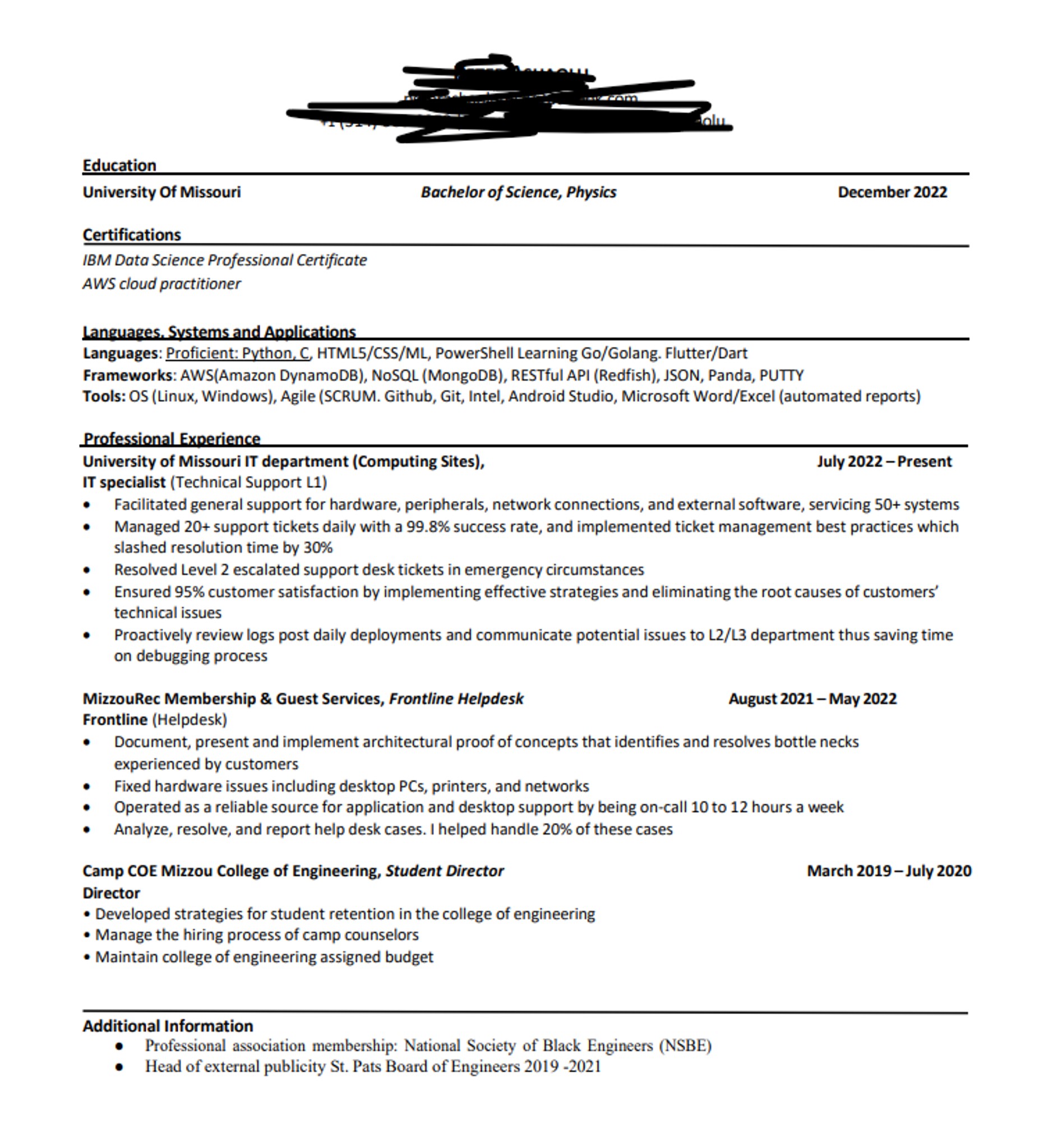
Can someone please take a look at my resume
What US law firms tend to hire more LLMs?
🥱🥱 you can’t never trust nobody

Bain & Company Currently making 188k TC, but have wanted to enter consulting for years. Is it worth it to pivot to consulting at the SC level? Or should I just stay in industry?EY Deloitte PwC Bain & Company McKinsey & Company Boston Consulting Group Oliver Wyman KPMG Kearney Alvarez & Marsal

As an ADC applying this summer for 2022 start, I haven’t gotten a chance to connect with any L.E.K. Consulting members and I really want to get to know the company better before moving on with my application. Any L.E.K. Consulting fish out there willing to spare a few minutes to chat about their work, the company, the culture etc? Thanks!

New to Fishbowl?
unlock all discussions on Fishbowl.


It depends on your definition of quickly. I did 1.5 years SA —> M (non-MBA, but the ideas still stand).
1) You need to be a bit lucky, but to position yourself best you need to come out of the gate and be strong with the little things. Don’t be afraid to ask for help if you’re not getting something — people don’t like getting asked questions you should have answered months ago. Take advantage of being new to ask as many questions as possible.
2) focus more on managing up than managing down. So many of my colleagues think having an associate to boss around is what their job as a manager will be — it isn’t. Managing client expectations, director / partner expectations, and communicating effectively are far more important. Coach your associates because you want them to succeed — not because you want others to see you wanting them to concede. It’s very obvious.
3) Check in about your progress often. If you find managers / SMs who will think, “Wow, they’re only an SA?” That’s a good thing — but ask them to say as much to your leaders (RL, CP). People chat within group and having a strong reputation with the people who will be your peers is good — I’m shocked constantly at how often partners will ping me and say, “What did you think of XYZ new hire?” who may be above me in level.
4) Set aggressive timelines so that you don’t mind when you don’t meet them. I had no intentions of making manager in <2.5 years. I was then put in positions where my skills were shown and I felt confident being in that role. But my plan was a 2.5 year plan — not a 1.5 year plan. I was very ready for both outcomes and I think that resolve helped me not panic around my leaders or not always being a “yes” man just so they’d promote me. Don’t suddenly change the behaviors that helped you build your reputation for fear of not getting promoted in the eleventh hour.
What would you say were the skills you needed to be successful other than managing client expectations?
That’s really difficult to answer due to the breadth of work we deliver.
I’m in the tech space, so the skills people value are being able to break down complex problems into simple explanations. But, more importantly, that’s part of knowing your audience. How I interact with software devs is different than business partners and people appreciate that. That seems to be a hallmark skill of successful people at M+.
Moreover, the basic skills need to be table stakes:
- Taking notes while leading a meeting and scree sharing? Annoying but a non issue
- Remembering what a client said and the context it was said in and actually following up? Sure
- Determining when I need to take responsibility for something and when my team should get credit? This took more time
- Hardest for me was probably determining when it was worth it to take the time to explain something to a junior team member versus doing it myself 4x faster. This is an important part of coaching and is a huge time sink at the beginning of projects but will make you better off
- most importantly, remembering to be a senior associate. I was thrust into manager roles, not the other way around. It’s a really important distinction because if you come in acting like a manager with other SAs or even experienced associates, it can rub people the wrong way immediately. Once you’ve lost the room and the people who are there to deliver the work — it’s really tough to re establish that rapport
Yes
Go mf pack!!
Ability to drive additional business within your existing projects
The ability to be anywhere close to Manager while the job market is so hot that you could find another Manager role if your current firm doesn’t promote you. Possibly, you’ve missed this window
How can I have possibly missed the chance when I just joined this year.
Economic cycles. If I had joined 1 year prior, I would have missed being up for promotion the first time during a huge economic boom. It’s something you can’t control
Just like any other managerial roles, you need to have an excellent leadership skills. You need to have high level of adaptability and communication skills. And most of all, it's more about the attitude.