

Related Posts


Bowl Leader
Bowl Leader
DM me for a referral!


More Posts
Happy Friday! Would love to have you all take a look at my first startup and sign up if interested. We are an angel investing service that matches angel investors and entrepreneurs like Uber for fundraising. It’s free to sign up and takes less than 2 minutes. Would really appreciate your support and feedback.
Investors (welcome newbies): https://usinvestmentnetwork.com/investor-home
Entrepreneurs (also welcome newbies): https://usinvestmentnetwork.com/entrepreneur-home
Thank you!!!!!
Check out the NEW Everharbor Resources -- now living on www.everharbor.com & not a random Google Sheet!
https://everharbor.com/resources
It includes:
-Creative Communities & Associations
-Articles
-Books
-Job Boards
-Tools
-Schools / Educational Institutions / Organizations
-Podcasts
-Newsletters
It's being updated continuously, so if you have any additions you'd recommend / think should be added, just let me know! Chris@everharbor.com
How hands-on are you in scrum meetings?

This is cursed.


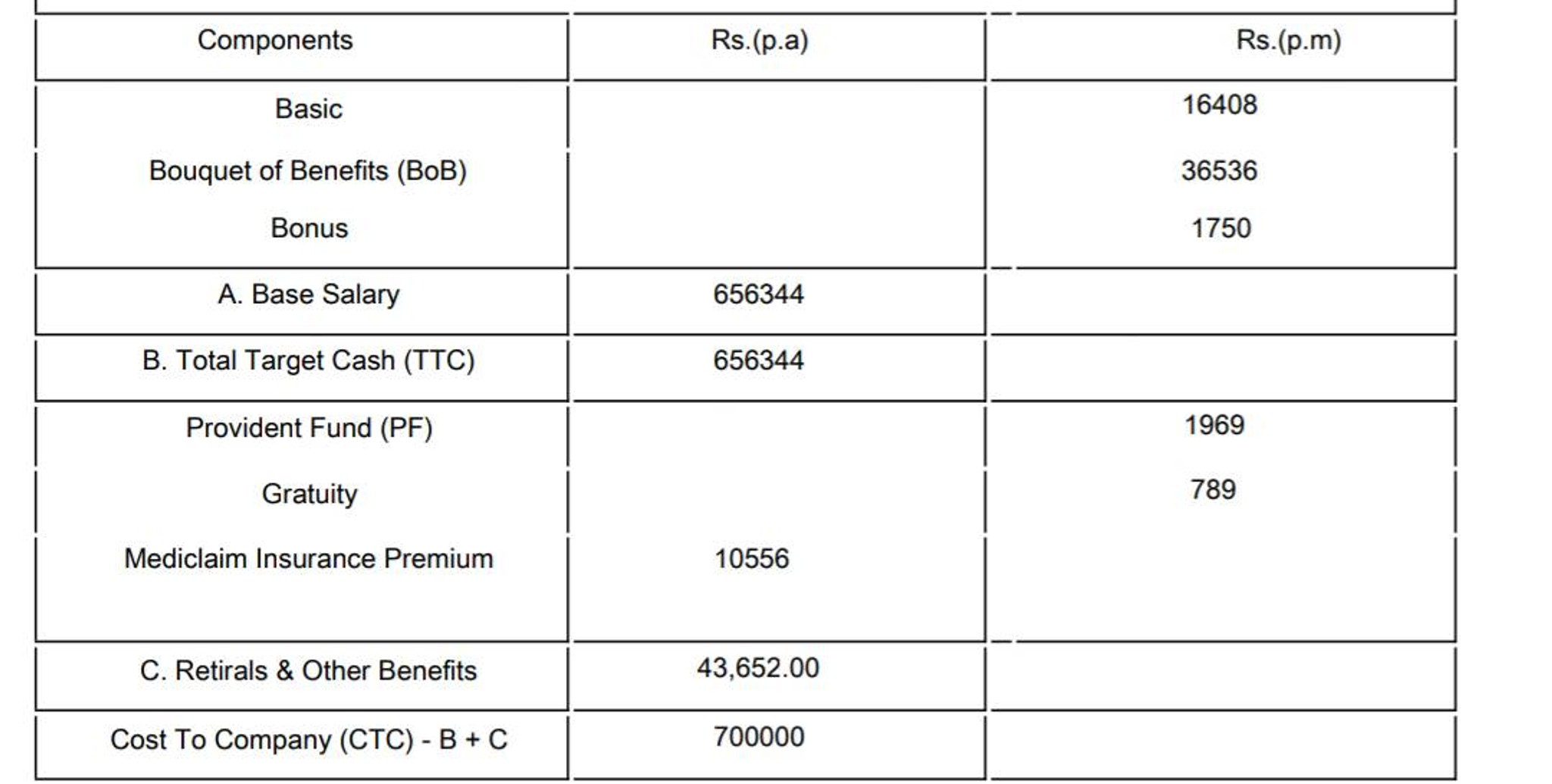
What will be in-hand salary pm...?
Additional Posts in Advertising

Are we all fucked?
Saturday night live is getting good again.
New to Fishbowl?
unlock all discussions on Fishbowl.


There’s also been laws passed in states like CA and NY that codified what defines an independent contractor. They’re to protect people who were being mislabeled as independent contractors but were actually full time employees without benefits. Companies also don’t pay into state unemployment for those kind of employees, either. Most holding companies have now made it a mandate to put the people on payroll to avoid problems. Which isn’t great but also works well from a tax standpoint under the new laws.
For both. Because you’re going to be paying in taxes at at a higher rate than you would if you were full time. Then at the end of the year you deduct your freelance expenses only from your 1099 income so that it offsets what you didn’t pay in on that money. it makes your business look bad on paper but pays off, unless you have a SEP IRA but that’s a lot to get into
Someone in HR could give the technical explanation but clearly there was a part of the Affordable Care Act regulation which had the perhaps unforeseen impact of deterring companies from engaging individuals as corporations.
You say that (technical explanation aside) “clearly" the ACA deters companies from engaging individuals as corporations. But I assumed the same as OP: If you’re now a company, then you’re no longer an individual- and the ACA should be irrelevant. So, perhaps it’s not “clearly” as evident. Also, there were plenty of 1099 gigs until this year and the ACA has been around much longer than that- perhaps the new tax code has a hand in this? (The new tax code has screwed me in multiple ways that have me thinking of going back to full-time).
I was just having this conversation at lunch. If a company puts a “freelancer” on the payroll (W-2) then how do they get around not having to provide benefits, etc?
Also, what is that acronym?
A number of factors including the agencies need to protect themselves from IRS audits, labor laws and potential liability’s of their employees. Payroll makes it clean for agencies as they then must then follow fed and state labor laws including tax withholding, workers comp., etc...Independent contractors also open the door for unemployment insurance claims rendering the agency that much more venerable to the IRS audits. It’s really all about the bottom line, once you’re on payroll your locked into a set fee, paid on regular basis, all with no surprises for the agencies to deal with. Conversely, independent contractors set their own rates, can bill for OT, overages and can submit for UI, all
Of which pose potential liabilities to the agency in many forms, from going over budget, dealing with and/or paying unemployment claims, in addition to many other factors that the contracting agency would rather avoid. Bottom line, it all ladders up to an agency protecting themselves, having ultimate control over the creative output, and money.
This, and all the other replies are insightful, thank you. All much more informative than I received from the agency, which was nothing.
Doesn’t answer one question though. Unless I am missing it somewhere. What makes one company different than another. If Jane and John start their own company called Doe Productions. An S-corp with a multi million dollar general liability insurance policy. They don’t want to be Jane and Joe on payroll. If you hire a company like The Mill, they’re also a company. What makes the companies different? Boo or Rama would not go on a companies payroll. Is it only in the nuance of what the services are being charged on the line items of the PO?
In the first 15 years of my freelance career agencies would pay my corporation. This worked out well and among other things allowed me to set up and responsibly fund a retirement plan. I think it was with the passing of the ACA that it no longer was legally viable for agencies to pay corporations and they transitioned to putting all freelancers on payroll. At least that had been my experience. I miss the days of
My corporate structure but have been happy to adapt to keep working
What’s the ACA got to do with it? Genuinely curious. Please explain .
I recall this change also impacting IT, like freelancers were not allowed to have phones or agency email if they were not in payroll. I think it had something to do with categories of employee and keeping people in the right buckets. I didn’t know it was ACA related, I feel like it was earlier than that that the shift happened.
Most of the time I work as a contractor. It’s the same for the agency, sometimes it depends on HR. You need to ask and also they can’t say no if you just want to bill them. The only thing is that sometimes it takes more time to get paid while under FT mode you get paid acording payroll. Last time I was freelancing at am agency as a temp and asked to be consider as a contractor HR told me that it takes 6 month to get paid, so I staid on payroll, getting 40% retained for taxes while as an s corp I only have to put 20%.
This is audit oriented. The DoJ or a pricey consultancy like PWC or KPMG probably told the finance and operations people to follow a process. In addition, there’s the benefits aspect and how someone considered an employee