

Related Posts


Toronto ad fish 🤠 I’ve spent most of my career working as a copywriter in London (6 years here, 2 years Toronto) and the market is pretty different here. I’m planning on moving back home but wondered….how do you find work in Toronto? Agencies barely post openings, is the recruiter scene strong? Is it mostly who you know?


Pro
Additional Posts in Human Resources
Do anyone know about any HR ops vacancy?
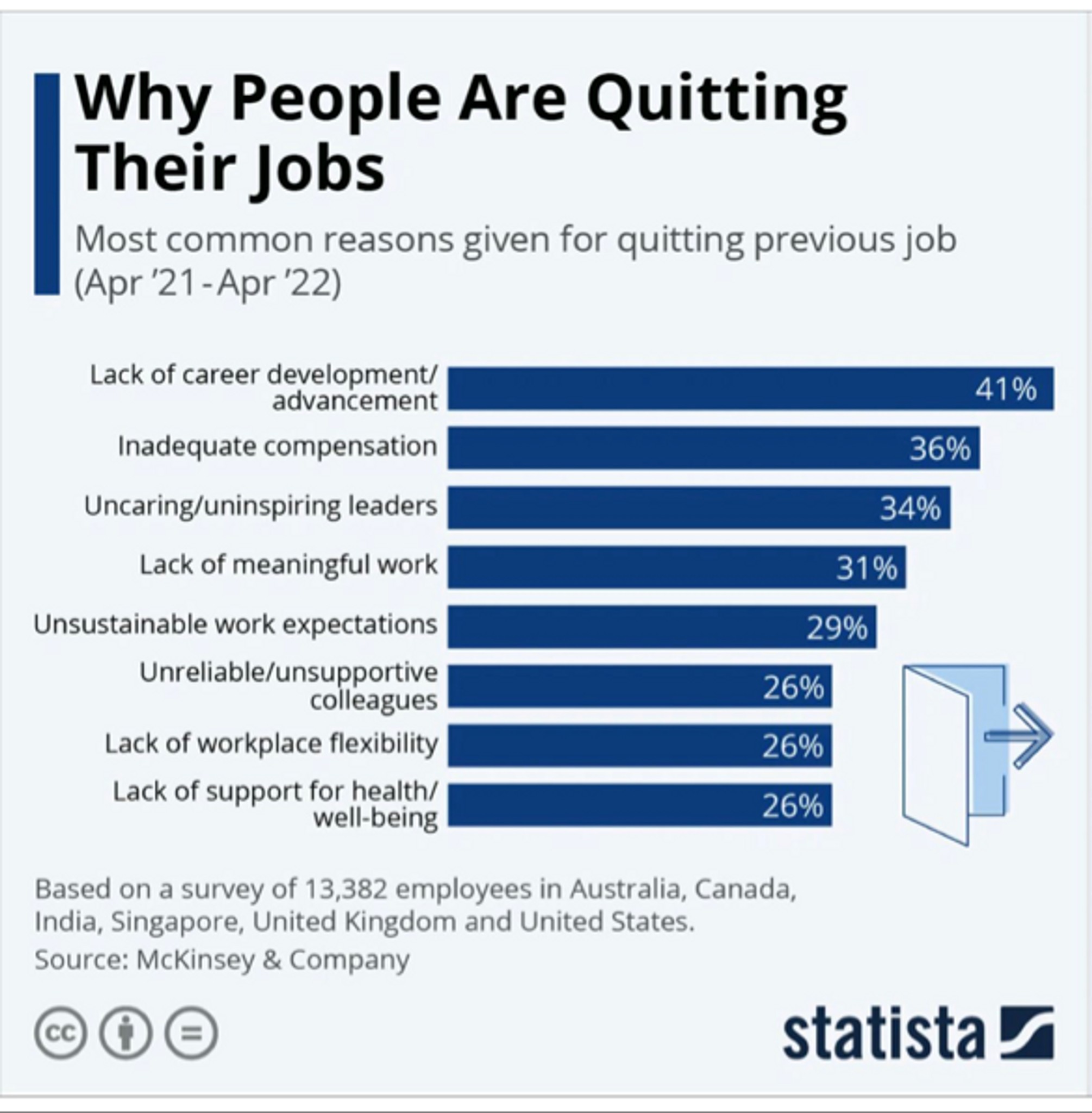
Why People Are Quitting Their Jobs

New to Fishbowl?
Download the Fishbowl app to
unlock all discussions on Fishbowl.
unlock all discussions on Fishbowl.


Rising Star
They do. My job is to help the employer and the employees succeed. It's not to be an employee advocate, it's to ensure that the company is not doing anything against the law to employees, and that lousy managers are corrected or removed even when they're not doing something illegal.
The problem is employees who believe they are entitled to not be disciplined for their inappropriate actions, employees who are so certain that they are "better" and "work harder" than every other employee, that think that HR exists to make sure a coworker doesn't annoy them, that it's our job to tell an employee with body odor to clean up, that it's our job to make sure that another employee's frequent coughing be punished, that their manager's holding them accountable for their work is "harassing" them and creating a "hostile work environment," and more. The other problem is managers who think that they have the right to violate things like the FLSA or FMLA or ADA or Title VII, and who have more power than we in HR do, and so we're stuck with the decisions of people above our pay grade.
💯
Employee advocacy resides outside of organizations. You’re describing unions, labour boards, human rights commissions, ohs, employment standards, not HR.
When HR people learn to do their jobs the way they are meant to be done instead of just aligning with toxic management, and employees learn that things are not always illegal just because they don't like the answer. It takes a special kind of talent that can't really be taught or learned.
I really believe it depends on the company you work for. I work in healthcare and have been a very strong employee advocate, when it was the right thing to do. There were some departments I spent a lot of time battling corporate for the changes needed or correction to a physician's behavior. Doing that helped the employees learn to trust me to bring issues to their manager or me. Their managers and I teamed very well. But I had no problem managing up or out for those who violated laws or policies. By the time they got to the "out" part of the process they'd had enough time to make the changes needed and chose not to. BUT, this was the culture of the system I worked for. I realize not all companies operate like that.
Rising Star
That's not being an "employee advocate," though. That's doing our job -- ensuring that managers are behaving appropriately, are being good managers, and aren't doing illegal things. That's our job.
"Employee advocate" means "taking the employee's side on everything" or "arguing with managers when they hold their employees accountable to performance." At least that's what I hear from employees.
Chief
I think this perception is one of HR's biggest challenges. Employees often expect advocacy, while organisations expect risk management, and balancing both is not always straightforward.