

Related Posts
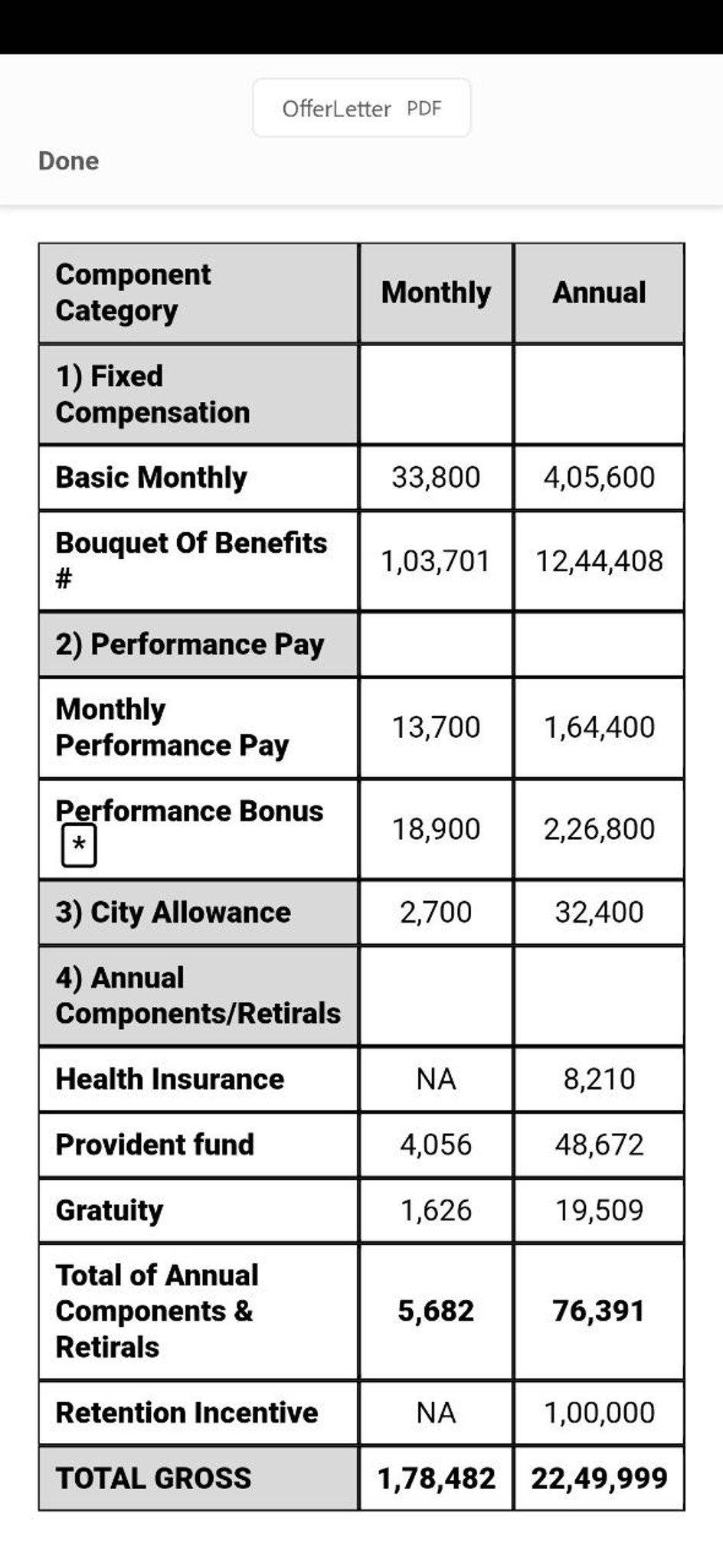
Hi fishes, Can anyone provide me info about GyanSys Inc , I'm in discussion with Gyansys about salary.
Current skill- SAP PLM Consultant
CTC is 14LPA (12.3F +1.8VP)
YOE is 6yrs.
CL-9
Is asking 22L as fixed pay okay? if not, what compensation shall I ask HR to consider ?? Thanks in advance for help🙂




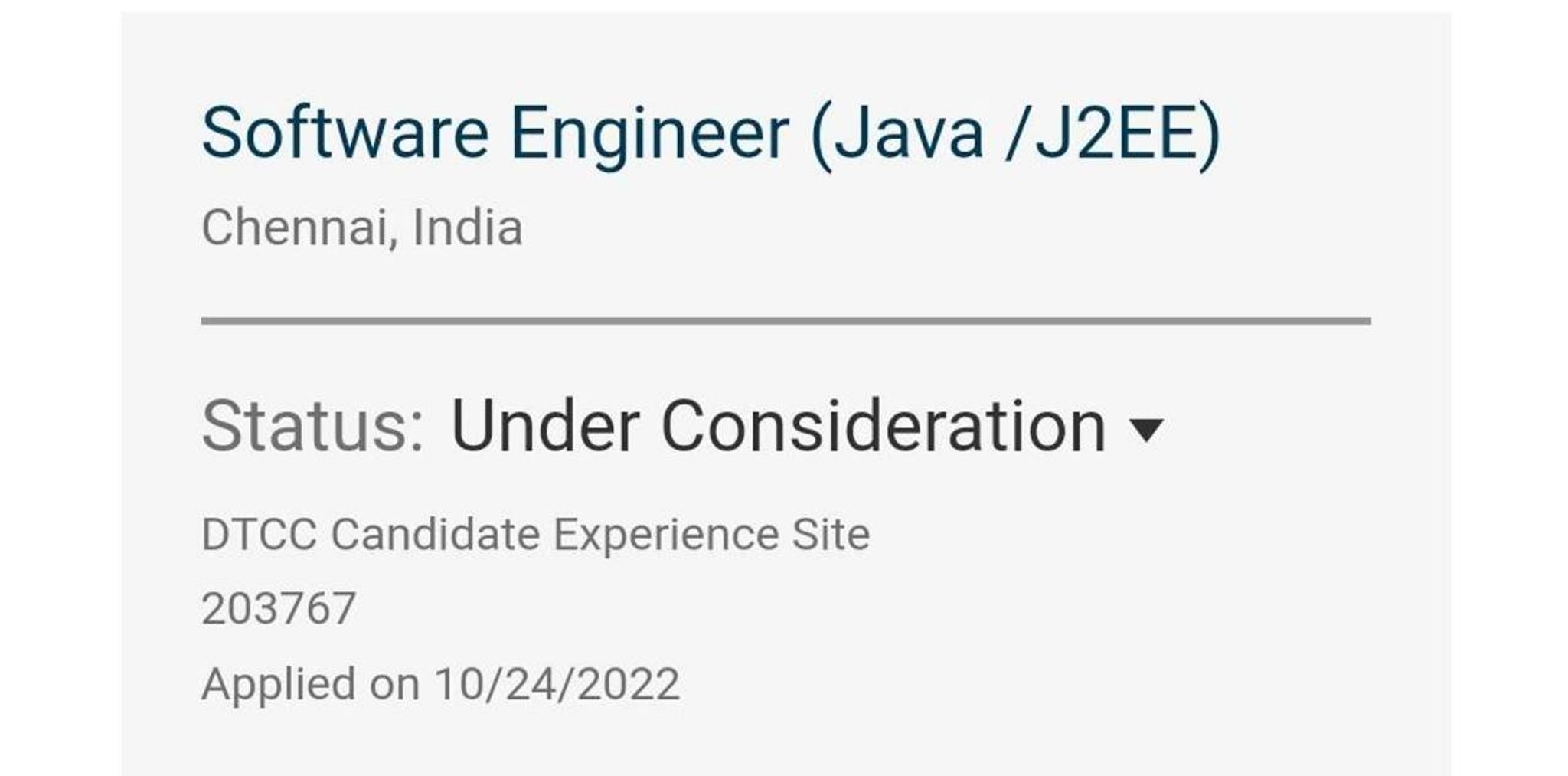
Hi fishes, I'm having below 2 offers. I'm little bit confused. Can you help me to choose one. Factors : career growth, work life balance. YOE : 2.7 yrs 1.Shell - Senior process data engineer (11+ 2L(variable) + 2.3L joining bonus (1 year) ) 2.Tiger Analytics - data science - python developer (14L fixed + 1L(2 year clause)) Shell Tiger Analytics

Conversation Starter

More Posts

Additional Posts in Consulting

New to Fishbowl?
Download the Fishbowl app to
unlock all discussions on Fishbowl.
unlock all discussions on Fishbowl.


Yeah, it is difficult for people to understand this is not the case because most people do NOT understand how US taxation works. In my former life as a Payroll Manager I always explained how United States taxation works in detail to employees who raised this concern:
IRS and State Withholding - When you are paid your regular salary or anything else at that frequency/ cadence it is taxed using the corresponding IRS tax table with the same frequency. So if you are paid semi-monthly, the income you receive is taxed using the semi-monthly IRS rate tables. The entire purpose of ANY of these tax tables (weekly, bi-weekly, etc.) is to annualized your income and withhold correct taxes for the entire tax year. State taxation rates have similar withholding tables in many states. Although some states use flat rates or do not have state income tax at all.
Supplemental Taxation Method - When you receive supplemental pay, bonus or lump sum payments, that don’t get spread evenly across each check like salary, taxes would likely be severely under withheld if payroll simply applied the same pay frequency rate table on the supplemental wages. Instead, a flat percentage is used to withhold taxes on supplemental payments. This is know as the supplemental taxation method. You typically see payroll withhold taxes at the supplemental rate to ensure enough taxes are withheld and/or as required by law when supplemental wages are paid on a separate check.
Aggregate Taxation Method - However, the IRS and some states allow taxation of supplemental wages at the pay frequency rate when these supplemental wages are paid on the same check as regular pay. This is referred to as the aggregate taxation method. So you may notice your bonus is not taxed at the supplemental rate by some payroll systems/ teams.
My preference - I prefer the supplemental method because it makes it easier for employees and their tax advisors to estimate tax withholding when the employee receives a large amount of supplemental wages throughout the year. Where as using the aggregate method will likely cause constant variations in withholding rates on each check because supplemental income like commissions may have large fluctuations from check to check pushing you into higher tax withholding brackets on one check but not the next.
Goal of Accurate Withholding - The purpose of all of these ridiculous calculations is to try to accurately withhold an employees total annual taxes owed. However, if you had (1) a pay change that puts you in a higher tax bracket than your payroll tax rate or (2) non-payroll/outside income that payroll doesn’t know about none of these calculations will result in accurate withholding with out intervention. On the flip side, if you have personal deductions that reduce your taxable wages your annual payroll income tax withholding will likely be too high.
Advice beyond Payroll - In any of the above scenarios you’ll end up owing taxes or getting a refund unless you seek tax advice/assistance. Accurate income tax withholding through payroll alone is elusive unless your income tax situation is very simple. For many people, total annual taxes owed will be the result of many factors in addition to their payroll income/taxable wages.
W-4 as a Tool - This is why it is important to fill out your W-4 correctly. And by correctly I mean, working with a tax advisor to ensure you fill out the W-4 to withhold right around the amount of taxes you will owe with adjustments made for all non-payroll considerations. You should be reviewing your withholding with your tax advisor once in early January or February, again in June or July, and again with ANY major life changes to ensure your annual withholding will be on target.
My Usual Disclaimer - This is intended to be a helpful guide to understanding the basics around payroll withholding in the overly complicated United States income tax system. This is not intended to be tax advice and should not be used as such. Please consult with a tax advisor before making any changes to your withholding.
There might be more taxes WITHHELD when you get your bonus payout, but the amount of taxes you pay is calculated when you file your taxes, and you’ll get a refund if too much was withheld. You aren’t taxed a higher rate for bonuses — it’s all part of your regular income
ACN folks notably quiet on this thread. Maybe it’s easier when there’s less to withhold?
OP you’re actually wrong
What's the right answer McK? This has been debated so much. Genuinely asking.
It’s city and state specific
OP is right about Federal. Mck could be right about how certain states deal with it, but I'm not aware of any (also I'm not a tax person so...)
It doesn't help that the internet is full of incorrect articles about this. Top search result I just found on this was a huffpo abomination conflating withholding and tax.
Sorry for any typos in my post above. Painful to check/ fix on the tiny app input screen!
TLDR, should I pay taxes or not??
Bottom line: whether your pay is 100% bonus or 100% salary, you still owe the same total taxes at the end of the year. The rest is just timing.
Well if you can read that... get a tax advisor and have them figure it out.
Or don’t and see how long it taxes for the IRS to start sending you demand letters or issuing wage garnishments.
Tough life decisions...
Or because K2’s response is much to long to spend time reading on a phone screen. Got two sentences in and 😳. And yeah - our disdain at lack of $$ is focused on places other than the government this year.
Thank you
Right. That's why I went to paycheck city bonus calc... but is there a "bonus tax rate" for federal different than tax bracket %?
25% supplemental income tax rate at Federal: https://blog.turbotax.intuit.com/income-and-investments/bonus-time-how-bonuses-are-taxed-and-treated-by-the-irs-8003/
Eh I got 9% bonus at ACN
That's ok K2, I've been called worse, and I long ago accepted that most of the human race is math-challenged
I'm in the 25% bracket. When I use a bonus withholding calculator, my 11k bonus clocked in at 7000... does that mean I'll see a refund for some of this at return time?
How am I wrong?
Last paragraph of that Turbotax article explains in more detail what I was trying to express:
“No matter what method is used to withhold taxes from your bonus at payout, don’t panic. Remember, taxes may be withheld from your bonus at a higher tax rate at payout, but when you file your taxes at tax time your actual tax rate is based on your total taxable income and overall actual tax rate, which may be lower. Depending on your taxable income, actual tax rate, and eligible tax deductions and credits you may get some of the money withheld back in the form of a tax refund.”
So in a nutshell — Bonuses are considered “supplemental income” which impacts the % withheld (usually higher amount withheld than normal salary) , but you don’t actually PAY a higher tax rate than your regular income at the end of the day.... the whole point of filing taxes each year.
You’re correct in a sense OP. But bonuses are taxed at a higher rate in the sense that it is 100% marginal income. So if you make 110k and are in the 28% marginal tax bracket, you will pay 28% tax on your entire bonus amount as opposed to paying 28% on just the income above 91k on your regular income and a lesser rate on the income below 91k