

Related Posts

Hi folks,
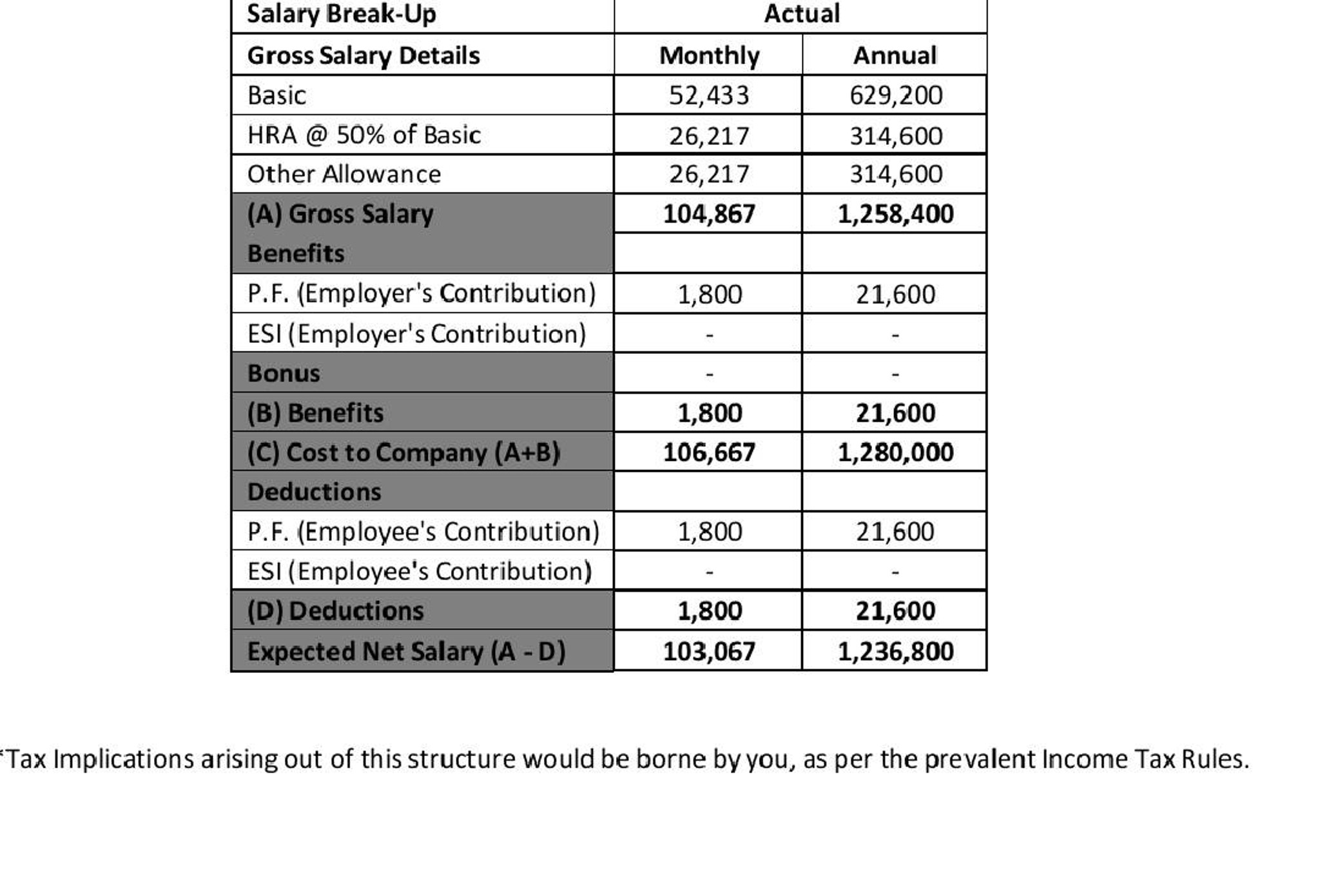
Can anyone confirm the variable policy of TechM, is it monthly or quarterly.
Heard from few folks that its was changed to quarterly and in offer letter nowhere its mentioned that its monthly or quarterly.simply said applicable as per variable policy.
Any folks recently joined and received salary please confirm it.
Thank you
Tech Mahindra
More Posts

Any word on Swift in Portland?


What's your date of Jalsa??

Additional Posts in Tech

Pro
Is it easy for engineers to become TPMs?
Some BS I noticed that I’d like to call out…
As we’ve all seen there have been layoffs happening left and right. However, there’s a right way to handle the situation.
Lyft isn’t one of them. I was with the company earlier this year on a contract to hire role that was ended suddenly. Then, yesterday I saw on LinkedIn that most of the team was laid off (including team lead) YET I’ve had a recruiter reach out to me to apply to my same old position with the team but…
-continued in comments-

Definitely using both of these.


New to Fishbowl?
unlock all discussions on Fishbowl.


I have not been much of a hopper and I am reasonably certain if I had been, I would make a lot more than I do now.
I was just told I have until 4/1 to find a new position or they will sever me. I’m trying hoping now. Also looking internally. Wish me luck!
The grim reality is that the only way you can really get a substantial raise is to jump organizations. New arrivals tend to be paid better than those who have been loyally plugging away. It's a common economic phenomenon that even has a name, wage inversion.
Send me a dm
Early in my career, I spent a longer time in one place to learn and grow. Then I job hopped every 2-5 years to both gain experience and increase my pay/level of responsibility. Now I am in a senior leadership role and making significantly more than those who have stayed at the company where I got my start. I have also hired many people with job hops of their resume. I see it as ambition and I want that in my employees.
I think it depends on several issues. Most already touched on, however, 1 big one left out....getting caught in the temp/contractor cycle where 1 is pigeon holed into only being a temp/contract person even if they don't want to be in that cycle but still have bills to pay while trying to find employment. I got caught in that cycle and it really sucked as employers assumed I was a job hopper even after being told what was happening. Job hopping is not always by choice and many employers need to realise that and make allowances and actually believe the interviewee. I finally got a break from a hiring manager that got me experience in telecoms CaaS area, unfortunately I was laid off and now can't get a job to save my life because I am 53 and disabled so 2 counts against me.
So again depends on circumstances of job hopping.
Depends. If you're just jumping for cash evey couple years, yes, you'll get tagged. If you are changing because layoffs or career opportunities other than pay, then no.
The problem I have encountered is the idea that everyone you start new with believes their industry is unique and your knowledge doesn't apply. It always takes a couple years for them to realize that design is design is design.
-15 Company Man
4 years is an eternity if the company you’re working for, the managers, the environment is toxic. Lots of things could’ve happened for employees to want to leave before 4 years like stagnant growth, constant reorgs/realignments, work pressure, and always pay is a concern.
Every time I left, I got offered a raise of at least 20-30%+, everyone time I went to manager/hr nobody would ever consider beating those numbers so really I blame companies for not working harder to retain their talent especially when it’s an open market and people are paying higher elsewhere.
Lots of answers here, and none are wrong. As stated many times, there is context to consider.
I have worked for some large companies and found it easy to be overlooked and forgotten about. It can be very challenging to stand out and be recognized for superior achievements in order to achieve the desired pay and position advancements.
I prefer small to medium businesses where I can put forth the effort and stand out. However, the downside is the short ladder and limited opportunities. As a manager, I am only two steps away from the COO. That doesn't leave much room for advancement within this company. I'm very happy here and have no immediate plans to leave. But I will eventually want to move up, and there really isn't much room here. I think one of the biggest things to keep in mind is whether you're running "from" something or "to" something. In our current day and age, I think the opportunities are often better when changing companies in pursuit of a higher position and/or pay. That appears to be the norm in the current culture, but there should be a clear strategy on your part when making this decision.
After being passed over for promotions by less qualified and less experienced co-workers, I've learned that loyalty doesn't have much value in the workforce anymore. In almost all the places I've worked, the senior staff were hired from outside the company, and were not promoted up.
Job hopping has its own issues, but I would not be making as much as I do now had I remained at the same places in the past.
Find your north star - Income, title, WLB and make your decision from there.
Depends on when and how you hop. I remember a sales rep who worked for 12 companies in 12 years. The average ramp time for sales is roughly a year. This person basically had one year of experience 12 times.
There's a clear path to growing income quickly when you interview for a new role, rather than promotions in your current. That said, there's a downside to moving around; it can be hard to rebuild allies and friendships, learn the internals, to develop rhythms.
Short term you can increase your earnings - at some point you will get stuck. However if you do job hop, you will struggle to build the relationships, integrity and dedication required to move into a leadership or executive position. There is something to be said about trust.
When you don't have a choice then it doesn't matter if it's detrimental or not
There is no long term career anymore. Upskill and offer what you’ve got in the market.
Yes. While one 2 year stint isn't the end of the world, seeing 2-3 of them is a red flag. It takes longer than this to learn a particular company's platform and become effective. We have staff that have been with us for 5-20 years and the work place is great, but if you've got a resume showing you're out the door in under 30 months, we will pass over your resume.
I wonder how many of those guys 10 to 15 years are getting take advantage of in compensation, having said that maybe money isn’t everything to them! You’re doing something right as their leader if they stick around like that. Good job!
Until you hit your career and financial goals, collect your experience and go. Be strategic with it though. Have a plan. Know what you want to get out of there and use it as polish for the next position. You don’t owe it to a company to be loyal if you feel like they don’t see your value. However, this only works if you are in fact a shining employee not just by opinion, but by fact. On the other hand, find a company that offers competitive and rewarding positions and work your way up. Could take a few years. Just be ready for that.
The Story of My Career Shift: Into and Out of IT
Today during a screening interview, the recruiter asked me: “Why have you changed jobs so often?”
It’s not the first time I’ve heard this question, and I knew exactly where it was coming from. My career path is, let’s say, not the most traditional one. I’ve had two major periods of rapid job changes, each with its own unique story. So, I decided to explain it in my own words.
The first big shift happened during the lockdown. Like many others, I found myself with extra time on my hands. But instead of binge-watching Netflix, I chose to challenge myself. I enrolled in a QA (Quality Assurance) course, wanting to learn something new and productive.
To my surprise, my efforts paid off quickly. After completing the course, I was offered a junior testing position. For me, this was a huge achievement—it showed how quickly I could learn and deliver results.
Leaving my established role as a seasoned Sales Manager for an entry-level testing job was a bold move. It was a step down in terms of status, salary, and experience—definitely a case of professional "downshifting." But I love challenges, and I embraced it. That’s how I entered the world of IT as a tester.
After just six months in my junior QA role, I was offered a promotion at another bank. It felt like a validation of my hard work and adaptability. However, my time there was brief—only one month! Why? Because something extraordinary happened.
I received an offer from a FAANG company. It was a dream opportunity I couldn’t pass up, even though the role wasn’t directly related to testing. But funny enough, I believe that my experience in QA played a big role in securing that position. It showcased my ability to learn, adapt, and perform under new circumstances.
The FAANG job turned out to align perfectly with something I’d always been passionate about—working with startups. It felt like a full-circle moment. My quick journey through IT wasn’t just a detour; it was a stepping stone that prepared me for this incredible role.
So, yes, my resume might look a bit unconventional, with rapid shifts and industry changes. But to me, it tells a story of curiosity, adaptability, and a willingness to take risks in pursuit of growth and passion.
Let's see how I did at today's screening 🧐😏
It is normal in software and information technology jobs to make a move every 2-3 years. At large companies or orgs, you might move within the company, which looks great on the resume. In contract work you get a lot of variety and different experiences, and you just need to note that it was a contract job to explain why it lasted 6 months or so. Certain industries, orgs, and companies value longevity and stay the same keeping their staff for many years. If you are walking into that situation and it doesn't fit, pay attention. Those same companies do hire contractors too. By the way, given our rapidly changing world, most of us have more one career in our lifetimes. So, when you say long term career, I think of a 10 to 15 year plan.
Ive run an infra/ops org for over 20 years across a few companies. You shouldn't need to hop (leave before 4 years) to get paid for what your worth, if you do its because you made a bad decision in who you work for, or you oversell yourself and you cant provide the same impact as the job gets harder after your onboarding year.
Eitherway its a huge red flag when I hire people and in most circumstances hoppers fail the interview process even if they look ok on paper. It happens for legitimate reasons sometimes, but especially in ops, what impact have you really had in less than 3 years on any job?
For what it’s worth, in this market it's quite challenging to know if you're making a bad decision in who to work for. I've worked for three orgs in the last 4 years and as far as I knew with my asymmetrical information they were fair, not a one ever gave me a COLA though. All the raises ever offered to me or any of my friends in the field are merit based. If I have to make a case for being worth more every year at an org that sees my good work every day to "potentially" get a raise next quarter or whenever there's budget, just to keep my salary consistent with inflation why would I bother when I could make 5-15% more, and more easily, by getting a new job. I agree we shouldn't need to job hop every year to get a fair valuation but so many do because it's the only way to get paid what they're worth.
You will gain in wages and position but lose in legitimacy and respect by your peers and reports for the upper level position you gain. You simply cannot become as well rounded and deeply knowledgeable in what you do if you job hop every 2 years. Most people I’ve seen who do that don’t add much value to the organization. I‘ve done 1.5yrs up to 11yrs. I’d say 4-5years is the sweet spot unless you simply love or hate the job.
Yes. And I have too much expectations about it
It may and may not be detrimental depending of how you left your previous job, obviously, you mustn't burn bridges as much as you can.
Other key factors would be, your contributions, network you've built, learned skills, yes, while moving from one company to another pick up something good and learn from the bad a.k.a. opportunities.
Ultimately, I've learned that blind loyalty doesn't pay off unless you're really good in playing the "game" in the corporate corporate world.
I believe that it depends, since most companies will have a por career growth attractiveness due to internal salary increase and employee development policies, so most of the time you'll need to change companies in order of getting better benefits and a salary raise equal or higher than inflation. These company policies gets ridiculous when old employees with seniority notice new employees getting hired with better salaries and a total lack of experience; given the seniors no real option to cope with their new peers conditions because of internal promotion and salary adjustment policies that do not allow a rise above x% of current salary, leaving the seniors with the only option to bargain for better conditions in a new company rather than their current one.
Unfortunately 1)the budget for retention is not comparable with new hires attraction. 2)Maybe it's not comforting but if a company struggles to float over market difficulties, probably the first thing to do will be activating the "firing shotgun"...It's matter of survival....So, there is not something inmoral to give our best to the company until it's not profitable enough for us no? Work is a transaction too. (You give your best, you deserve the best retribution as well)