


Related Posts

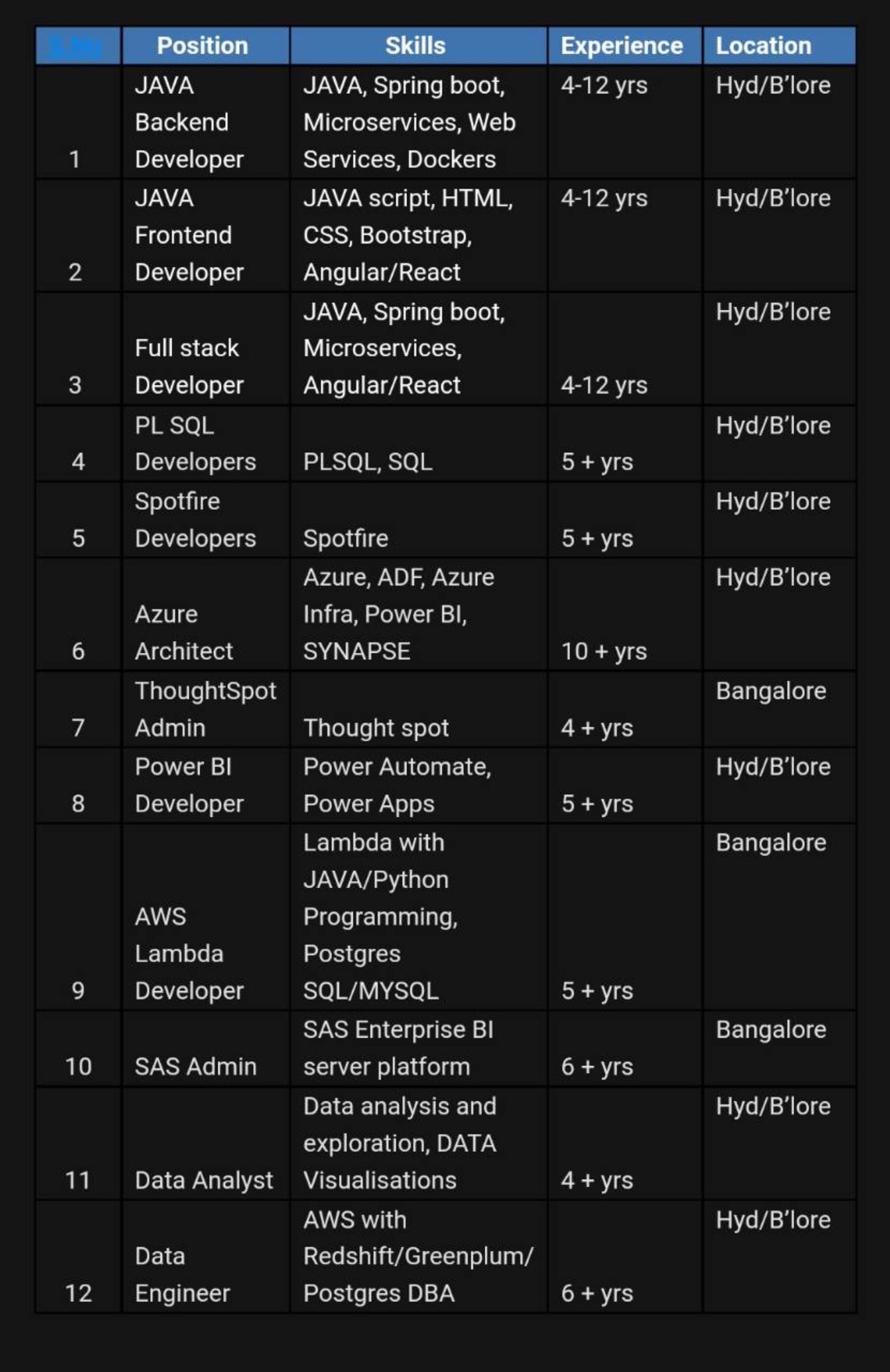

Hi all
Any openings in Goa location?

More Posts

Mentor
what are your average weekly hours?
Any book suggestions for married couples ?
Additional Posts in Excel Genius
Still don't have xlookup. #fomo
Anyone know what these badges are?


New to Fishbowl?
Download the Fishbowl app to
unlock all discussions on Fishbowl.
unlock all discussions on Fishbowl.


Coach
Monthly analysis are always subject to some level of seasonality + expensed in different months vs revenue.
In theory (and somewhat in practice), the correct approach would be to identify this trend (to which P&L line the expenses most correlates to the expenses + to how many months there is a delay in them); however, you have few data points to do this accurately.
In this case, I'd just the average of the trend in a 12-month basis, and forecast proportionally
Coach
I see - well, since it's an exercise I'd assume there is no right answer, but you'd have to defend your proposal, so, here's what I'd do (hopefully it can help):
- Evaluate both monthly, quarterly, and annual increase to identify possible trends
- Gather business days and inflation data (future CPI will - hopefully - be lower than past 24 months)
Assuming there is no clear trend in the time-frame, I'd use the 12-month datapoints (the average) to create a rate of increase and keep it constant (after adjusting for inflation). Since you have 24 months, you should always have 2 same-months prior (e.g., Jan-24 would use Jan-22 and Jan-23 data).
This way, your assumption would be that, adjusting for inflation and seasonality, your expenses would be X in a given month - and you can budget it accordingly. You could also add on what you would do if you had other sources of data, such as revenue and estimated growth (+ more datapoints to prove the 12-month assumption)
Usually can be solved by grouping (e.g., labor v non-labor) or functional classification (if you can infer the why behind the spend via functional tag or cost center/expense combo).
Can you expand on this? I’ve got the items grouped by personnel costs and other expenses with multiple buckets inside each. It’s just tricky because even in those buckets the trend isn’t very consistent or identifiable
Take the number of weeks and/or business days of each month into account. Also seasonality for your business.
Keep it in mind though. Do as much as you can, then add verbally that if you had XYZ information after talking to your business partners you could fine tune it. That’s what’d happen in a real scenario.
It’s probably more about how you approach the problem than whether your forecast is good.
Are they asking you to identify trends or make a forecast? Or is it a budget for cost control?
Expenses are typically highly variable depending on many factors.
There isn’t enough info here on what exactly they are looking for to provide specific feedback. More than likely they want to see how you would approach a problem and if you can construct a logical model based on defensible formulas and assumptions.
Appreciate the response! Had the interview today so don’t need the help any longer but agree with your last item, it was certainly to see how I’d tackle the problem and then present it to an audience
Test