

Related Posts

What’s the dress code for Wells Fargo Bangalore?

Dear Fishes, I am switching for the ist time in my life in 8 years.Need guidance on which will be better in terms of wlb,job security and learning wise.offered compensation is nearly same in all 1.Harman(product) 2.Hitachi Vantara 3.Banking captives:-Deutsche,UBS, HSBC Yoe:8 Techstack: java,Microservices,Devops,AWS,Azure Harman Harman Connected Services Hitachi Vantara Deutsche Bank UBS EY Deloitte PwC Tata Consultancy Wipro Capgemini Cognizant HSBC HSBC India

What is the average salary of a Senior 1?
Additional Posts in Human Resources
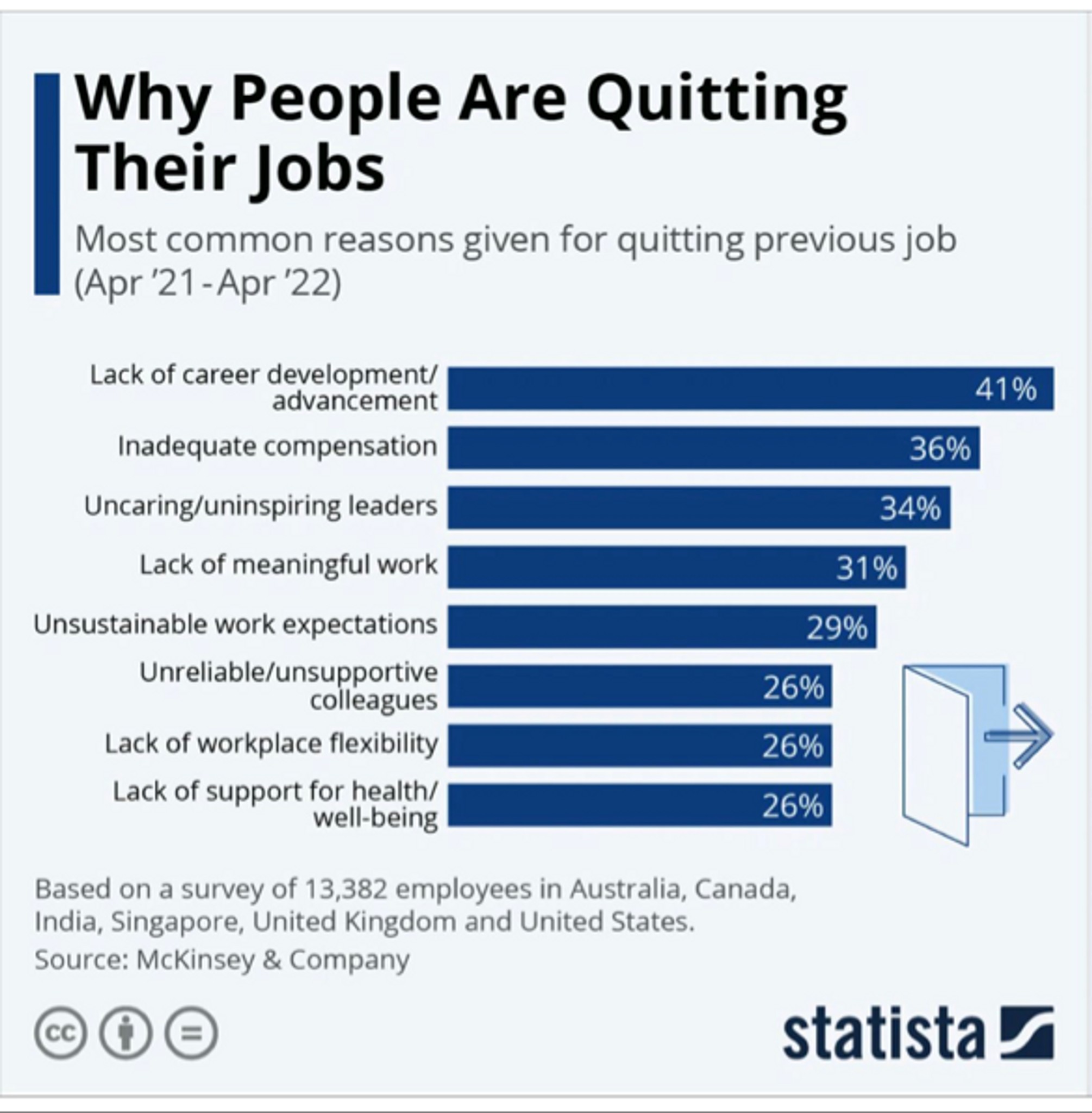
Why People Are Quitting Their Jobs

Pro

New to Fishbowl?
Download the Fishbowl app to
unlock all discussions on Fishbowl.
unlock all discussions on Fishbowl.


First off the best I can tell you is you need to refer to the ADA laws. Don’t ask advice so much on the Internet because not everyone here is fully reversed in those ADA laws. Also how valuable an asset is this employee because if their being there is vital then no the request is not unreasonable? If the employee can do this work in an a specified area or home then this may be the route to go. You can ask the employee for a doctors note regarding the employees condition & once verified make the best choice for all.
I think an interactive conversation to understand how it triggers (touch, airborne, ingestion), and follow-up documentation from her doctor, will help navigate this situation. An important question is how does she manage her allergy in other places outside of the home, such as supermarkets, retail settings, restaurants, etc.
She probably does like the rest of us do that has a busy schedule. She probably has Walmart delivery or a delivery service. Deliver groceries to her doorstep. as for getting medication’s or other things elsewhere, most places do have drive up or again offer delivery service at which point she can have them leaving the stuff on her front porch and she may have a certain way of how things are taken care of being brought from outside into our home.
WOW... With a smile on your face inform her: "Not a Reasonable Accommodation - get back to work".
Chief
Great way to find yourself on the losing end of an ADA lawsuit.
Chief
In my opinion, no. And did you get her doctor to certify that she has a severe nut allergy?
I get that there are people who can and have died from ingesting peanuts or even breathing the peanut dust from, say, a Payday bar. But to insist that the entire office change their eating habits is not reasonable.
The ADA requires reasonable accommodations after an interactive conversation and input from their doctor. It does not require that the accommodation be the one the employee asks for.
I’m wondering if this candidate is using this as a means to get an accommodation to work remotely.
While not an employment example, we had a similar situation in my neighborhood where a woman claimed to have a severe latex allergy and wanted our community club house to be balloon free and for children to not use latex pool toys in the community pool.
Our HOA asked her for medical documentation and she produced pictures of her in the ER, but would not produce any documentation from an Allergy Doctor or a PCP. Not saying she didn’t have the allergy, but our HOA lawyers said that producing a picture of you in the ER with a latex allergy bracelet isn’t enough evidence because ER allergies are self reported. We ended up not making any accommodation for her.
In your case, the employee needs to provide medical documentation from an allergy doctor that clearly outlines (1) the specifics of her allergy, and (2) what accommodations they recommend from the employer.
Only then, can you (and your companies legal team) make an informed decision about what accommodations are reasonable for the employee and nit at the expense of other employees.
Some of these comments are wild. OP without engaging in a good faith dialogue and going through the interactive process you cannot determine whether the request is reasonable or not. Go through the interactive, place the employee on a temporary accommodation that meets their needs (maybe full remote or a separate office) while exploring other potential accommodations and gathering the appropriate medical documentation and follow the ADA process. Document everything and have a second member of the HR team as a third-party and note taker during your conversations with the employee.
AskJAN.org has a great page on allergies an possible accommodations: https://askjan.org/disabilities/Allergies.cfm
Some of these responses make me wonder if y’all love causing unnecessary risk.
Rising Star
A reasonable accommodation here likely needs to be on the person-level. Would suggest exploring the potential of the employee working remotely for their safety.
Banning an entire food type in a workplace is extreme, but technically it is doable. Many food processing facilities require them to be allergen-free to ensure safety of their customers. So…it os doable. Just not going to be popular.
I agree. Allow her to work from home. If she is so severely impacted, it is the safest way to ensure her health. Do ask for documentation from her doctor. If that is not satisfactory for her, consult a workforce attorney. Don’t do this on your own. The lawsuit could be substantial.
You must engage in a good-faith dialogue with the employee to determine what specific accommodations are necessary for them to safely perform their job, obviously I don’t know your work environment, but if they insist on a complete nut ban it could easily fall into an undue hardship situation.
In response to an employee notifying us of a severe allergy, we have taken steps to ban a specific food item from our buildings. The affected employee would potentially die of anaphylaxis is they came into contact with this allergen.
All it took was an understanding of the issue, a message to the whole team advising them what they needed to know, do and not do, clear signage and including in policies, inductions, etc. First aid personnel have a clear picture of what they would need to do and where to locate the appropriate medication for this team member.
It wasn't difficult, it wasn't much to implement to ensure the safety of one of the team, no-one has an issue with this & everyone supports it.
Result is an employee who not only feels safe but feels valued and a workforce who know we would support them similarly if needed.
A. Be sure you do not reveal WHO the employee is.
B. Gather medical documentation.
C. Verse yourself in ADA.
D. determine if this meets ADA.
E. Explore ways they can remain safe in the workplace and ask them how they have managed in other work environments or if remote work is an option for ALL parties
F. Document all company attempts to mitigate risk
G.document a plan of action should something happen.
I think it’s completely reasonable. My children’s primary school had a no nut rule across the entire school. Absolutely doable and for a very good reason. Nuts can literally kill people with allergies and it is not the EE’s fault they are allergic. Quite shocked by a lot of these comments.
Me as well. Especially those working in the human resource department. I find that not only some of these responses are like they’re more personal base than professional based.
To echo some of what was said above you should definitely be consulting an ADA lawyer. It is possible to make your office a nut free environment, schools do it all the time, but whether that is reasonable to do will depend on quite a few factors. How many people are in your office? If it’s 4…completely reasonable. If it’s 1000. Less so. Can her job be completed from home? If so, that is a much more reasonable solution. If you do decide it is reasonable to be a nut free environment, there will be several things you will need to consider. 1. While I’m not a lawyer I think I can safely say any lawyer will agree with me here…do not guarantee her safety. You only have so much control over what other people do, and you have less control over say a plumber who comes in after hours to fix the toilet. If you guarantee it’s nut free you are putting yourself at liability. 2. If you go nut free, how will you enforce that? If someone brings in a snickers bar, what will the consequences be? What if someone made a peanut butter sandwich for their kid and didn’t wash their hands enough and she has a reaction? Rules are only as good as the enforcement of them. 3. The employee may disclose their allergy to others but it is HIPPA protected. You may not discuss their allergy. If they do disclose, how will you encourage a good work environment for them? All of this will be for naught if people treat the employee badly because they are annoyed about the policy and she says she is working in a hostile work environment.
Let me be clear. I fully advocate working with this employee to find a solution that is actionable. As the mom of a child with severe food allergies, I know how terrifying and debilitating living with this can be. I hope you can find a solution that works well for you and the employee. Good luck!
Chief
HIPAA, not HIPPA, but otherwise a great answer.
Not a reasonable accommodation
Chief
It's too soon to declare that, and if you're an HR professional, you should know that.
I would request documentation from their doctor. I have found that some employees claim they need certain accommodations but cannot get those backed by a doctor.
Chief
That's part of the legally required interactive process, which OP has not clarified whether they took that required step.
Shouldn’t the “one” person with a nut allergy be the one to protect herself?? 🤔 I worked with someone who had a deadly nut allergy and just did what he had to do. We did our part and made sure he wasn’t exposed to any…that’s what being an adult is, being accountable for your own allergies and carrying an EpiPen
Chief
"We did our part and made sure he wasn't exposed..."
Sounds like you didn't just have the "one" person protecting himself; sounds more like you/your company took steps to protect him.
Chief
It is a difficult balance. Supporting someone with a serious allergy is important, but any workplace restrictions need to be proportionate, evidence-based, and clearly communicated.
That’s right! The company could be sued. Under ADA there’s a request to find a reasonable accommodation in the workplace. That’s not reasonable. There’s obviously an assessment that needs to be completed. But this would cause an undue hardship on the entire organization and pose a serious risk to say they can accommodate such a risky request. What I said is not a matter of opinion it’s a matter of fact. Here’s a tissue to wipe the tears from your eyes . I recommend you grow a pair, and leave HR to the professionals.
You wish lol
I had a similar experience working at an animal shelter, which I can tell you is impossible to not have peanut butter, I started the interactive process and doing so showed that she did in fact a nut allergy but not a severe as she claimed. I followed the ADA process and guidelines to the letter. I recommend you do the same.
I think remote is the only way to go on this. Their safety is more important than anything and that’s a lot to ask of 132 people. In fact if I was the person with the allergy, I wouldn’t even feel safe being outside, ever.
Consult with your legal council on how to proceed once you have determined the validity of her claim with doctors notes, etc.
This is not something I'll take on alone.
My professional advice is not to make an assumption but to first engage in the interactive process to fully understand the employee's medical limitations and how the allergy affects their ability to safely work in the environment. While a completely nut-free workplace may be one potential accommodation, the ADA doesn't require an employer to automatically grant the employee's preferred accommodation. My goal would be to identify an effective reasonable accommodation that enables the employee to perform the essential functions of the position while considering operational impact and whether alternative accommodations could effectively mitigate the risk.
Chief
You sound like a knowledgeable HR person!